

Why Hawaiian Wedding Rings Match: Symbolism and Heirloom Tradition
Couples who ask why Hawaiian weddings so often include matching wedding rings are usually after something deeper than a coordinated look. They want a visible sign that two lives are joined, and one that will still mean something in thirty years. Hawaiian wedding symbolism puts unity, honor, and continuity at the center, and a matched or coordinated set of bands carries those ideas into everyday life.
One note on history first: the lei, not the metal ring, is the older Hawaiian symbol of union. Modern ceremonies tend to use both, and that blend explains most of what matching rings mean today.

The lei exchange is the "unbroken circle" that matching rings echo
Hawaii wedding guides, including Weddings of Hawaii's "Hawaii Wedding Traditions," describe the lei exchange as a tradition tied to love and aloha. They also note its "circle with no beginning or end" symbolism, which is the same idea people associate with a ring. Aloha Ever After's guide to the lei exchange (April 3, 2014) frames the lei as an intentional gift rooted in love, respect, gratitude, and hospitality.
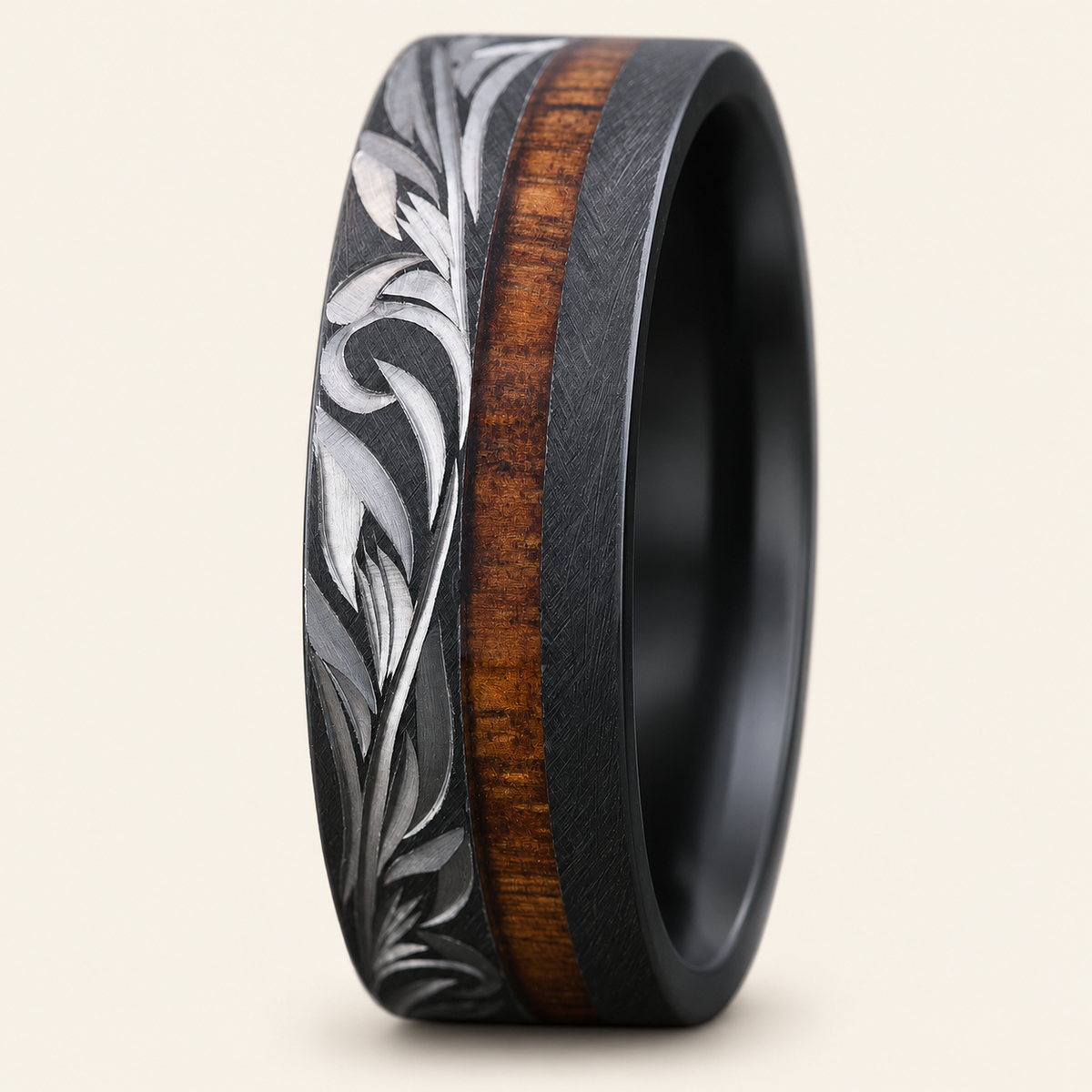
That framing helps explain why rings feel so natural in a Hawaiian ceremony. Each partner gives and receives something circular, something worn close to the body, with a promise attached. Maile lei, made from the fragrant green maile vine and traditionally worn open rather than tied, are widely associated with honor and unity. It's no surprise that maile leaves show up so often in Hawaiian ring engraving.
When both partners wear a band from the same design family, the exchange doesn't end at the altar. It continues in every photo, every handshake, every ordinary Tuesday.

Matching doesn't mean identical
Most couples who choose "matching" rings don't pick two identical bands. They pick a set that clearly belongs together. That can look like:
-
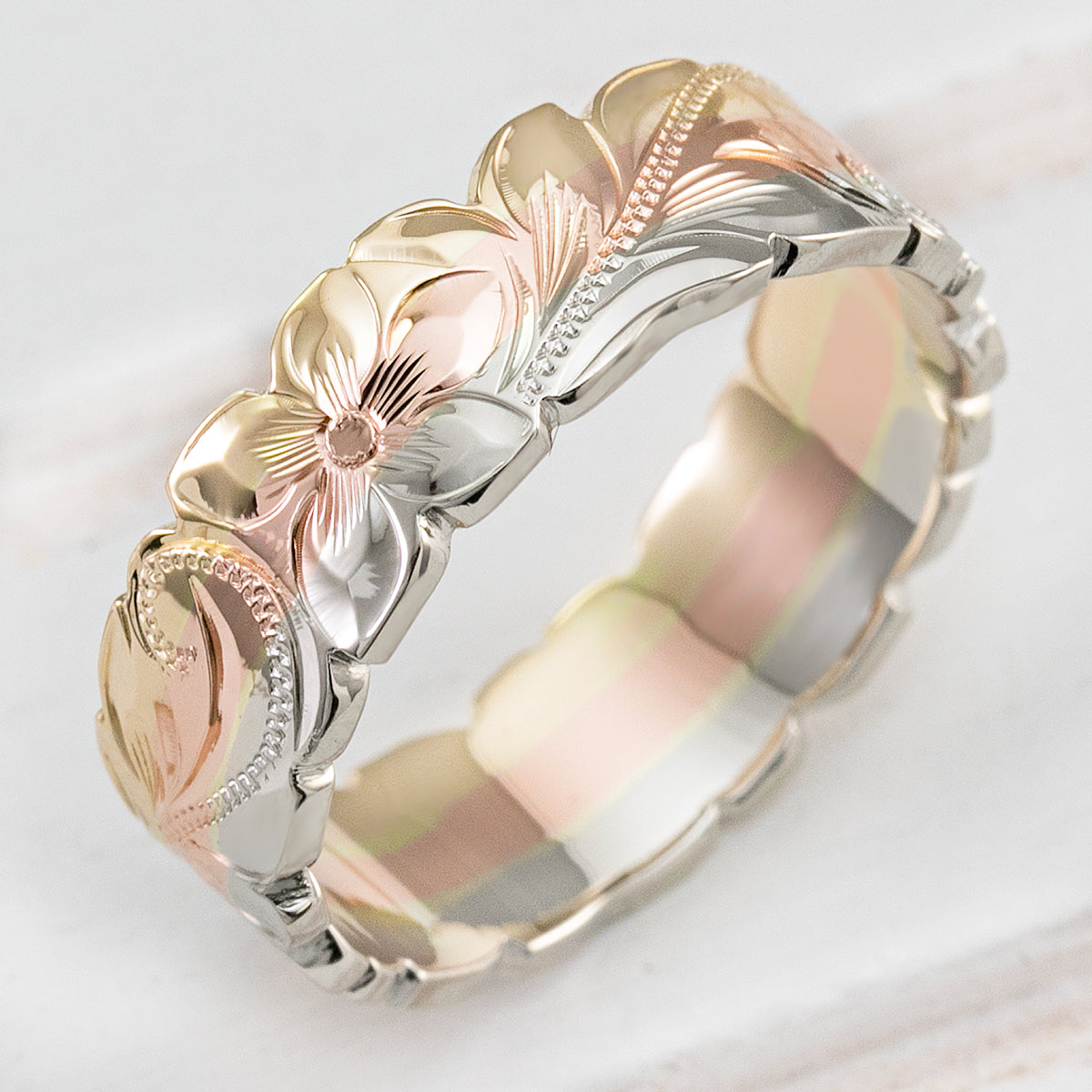
The same motif vocabulary, such as maile scrollwork or plumeria
-
The same finish, whether polished, satin, or engraved
-
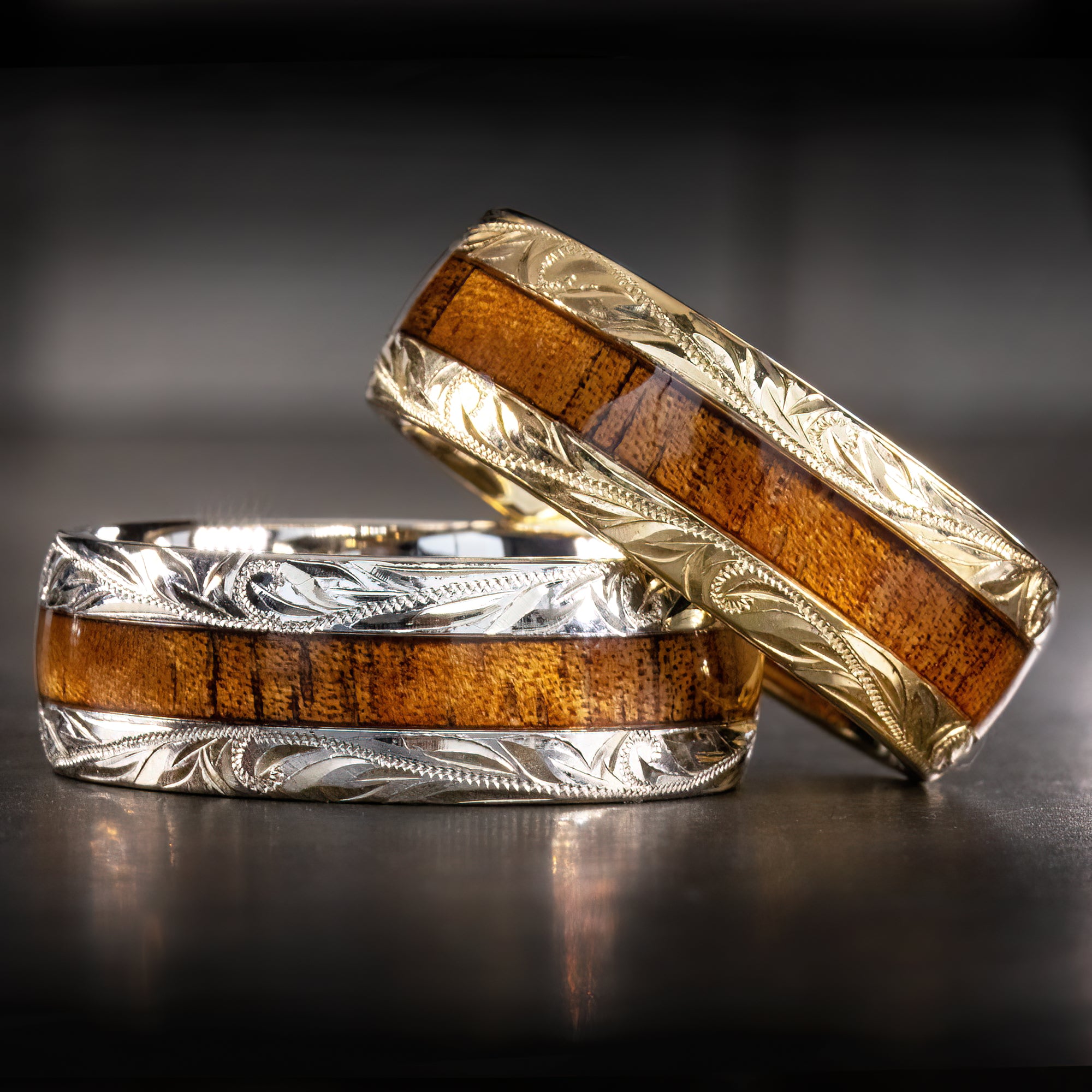
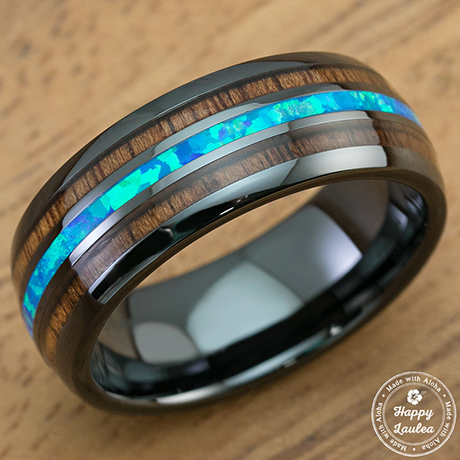
Coordinated materials, like gold with gold or Koa wood with a matching inlay
-
Complementary widths that suit each person's hands

Hand size, job, and daily habits matter here. A wider band that looks great on one finger can feel bulky on another, and a ring worn during manual work has different needs than one worn at a desk. Complementary widths solve this without losing the sense of a pair.
A simple checklist keeps a set cohesive:
-
Share at least one symbol or pattern across both rings.
-
Keep craftsmanship cues consistent (engraving style, border treatment, finish).
-
Personalize each ring so it feels like yours while still reading as part of the set.
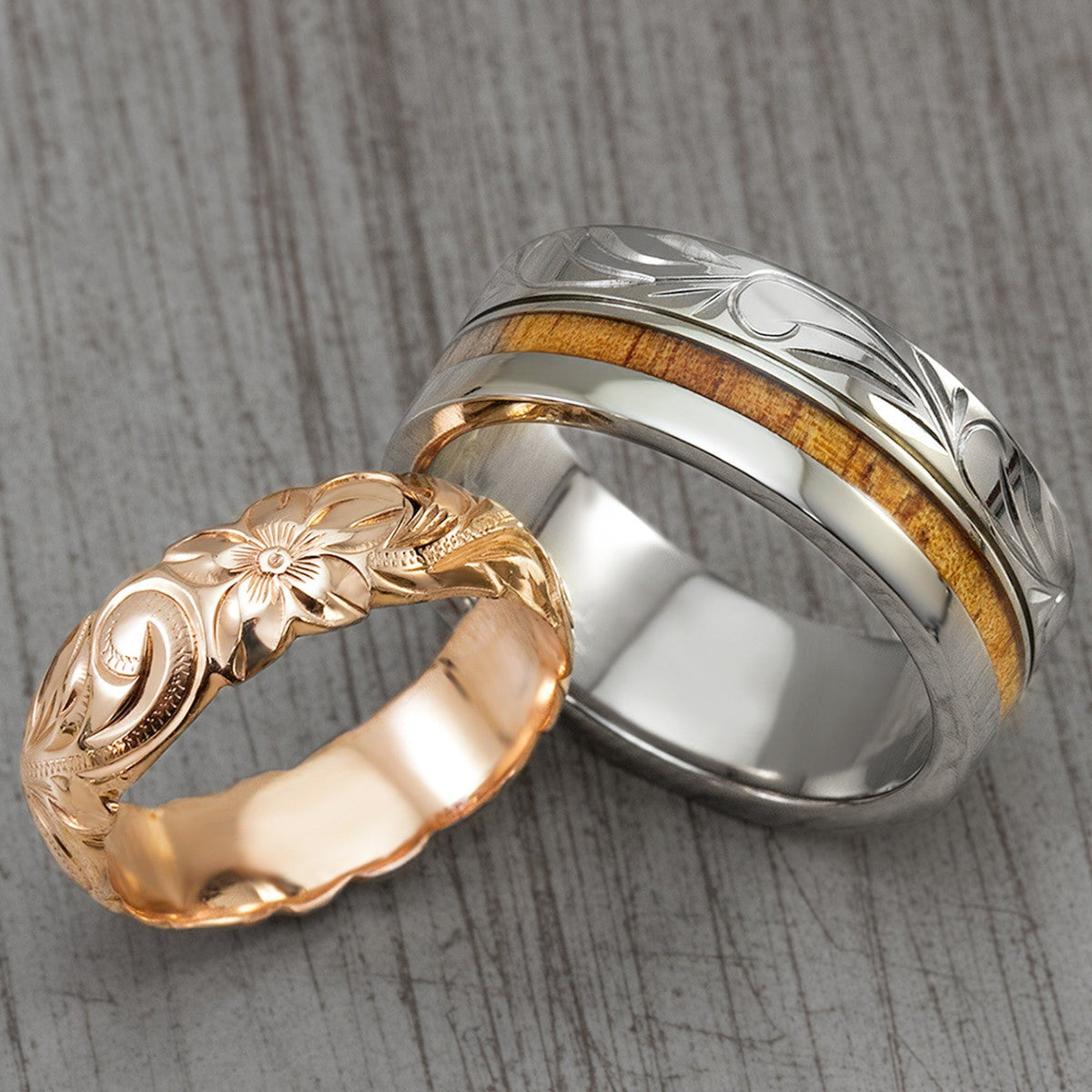
Different metals can work too. If one partner prefers white tone and the other yellow gold, a shared engraving pattern and similar widths still tie the pair together.

Hawaiian jewelry language gives a set its meaning
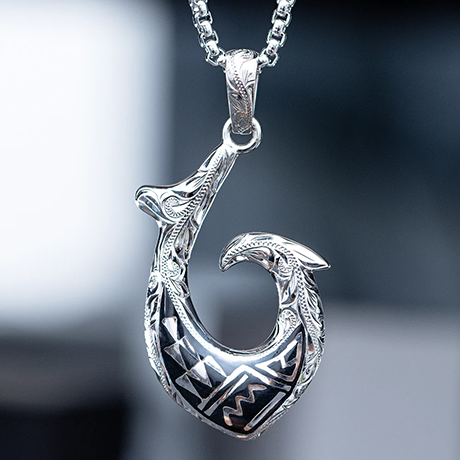
The look most people picture when they think of Hawaiian wedding bands has a specific vocabulary. Happy Laulea's guide to Hawaiian heirloom jewelry (August 15, 2026) lists the recognizable details: Old English-style lettering, black enamel fill for contrast, and Hawaiian floral motifs such as hibiscus and plumeria, with maile leaves often appearing in ring and bracelet scrollwork.
Those choices carry meaning. Plumeria is commonly associated with new beginnings, love, and grace, which suits a wedding band. Maile points back to the lei and to honor. Old English lettering lets a name or message stand out against black enamel, so the ring reads almost like a small inscription.

Heirloom jewelry in this tradition, from engraved bands to gold pendants, is personalized and given at meaningful milestones, weddings included, then kept in the family across generations. That's the difference between a "Hawaiian-looking" ring and a true heirloom: engraving a name, a short phrase, or a date turns a matching set into a family keepsake.

At Happy Laulea, couple sets are handcrafted in Hawaii with this vocabulary in mind, including hand-engraved Hawaiian Old English and Maile designs in gold, sterling silver, and titanium, as well as Koa wood and inlay options. The shared scrollwork and bordered motifs are what let two different rings read as one set.

Where Hawaiian ring tradition comes from, and why it evolved
Older Hawaiian union practices leaned on lei and other forms of symbolic giving, not metal bands. The engraved gold style came later. According to Happy Laulea's research, the defining features of Hawaiian heirloom jewelry (Old English lettering, black enamel, Hawaiian motifs engraved in gold) were established during the Victorian era in the late 1800s, shaped by European jewelry forms and adapted by local craftspeople.
You'll often hear this story tied to an 1887 Jubilee origin. Some historians challenge specific details of that account, so it's safest to treat the Victorian-era timeframe as well supported and the exact origin story as debated.
Seen this way, matching rings aren't a break from tradition. They're the latest stage of an evolving one: older symbolism of unity and honor, expressed through a jewelry form that Hawaiian craftspeople made their own, now offered in newer materials like titanium, Koa, and meteorite inlay.

How to choose matching rings respectfully
Start with meaning. Choose motifs because they reflect your story. Maile for honor and the lei tradition, plumeria for a fresh beginning, a family name or a date that matters. Random decoration reads as costume.
Look closely at craftsmanship. Quality heirloom engraving shows in a few places:
-
Clean, deep lettering with consistent spacing
-
Crisp black enamel contrast (when enamel is used) without bleeding or gaps
-
A clear choice between raised and engraved designs, since the two look and wear differently
-
Materials that can be resized or repaired if you plan to pass the ring down
Some contemporary metals are harder to resize or repair, which matters if the ring is meant to outlast you.
Plan the set before you order. Decide what both rings share (motif, border, finish) and what can differ (width, metal tone, engraving placement). Doing this early prevents the common problem of two rings that are each lovely but don't look related.

Questions couples often ask
Do matching rings have to be identical?
No. Shared symbols and consistent craftsmanship make a set. Widths and even metals can differ.
Does the lei exchange explain why rings feel so significant?
It's a big part of it. The lei's unbroken circle and its meaning of love and respect give the ring exchange a cultural echo, especially when both are part of one ceremony.
What if one of us prefers a different metal?
Keep the engraving pattern and proportions consistent, and let the metal vary. The motif does most of the work of tying the pair together.
How do we keep the set feeling Hawaiian year after year?
Choose symbols tied to your own story, add personal engraving, and care for the rings so they can be resized or refreshed. Visiting a studio, as you can at Happy Laulea by appointment, also helps you see the craftsmanship in person.

A matched set works best when it carries your story
Matching rings resonate in Hawaiian weddings because they translate the lei's unbroken circle into something durable and worn daily. The strongest sets share symbols and craftsmanship, leave room for each partner's comfort, and carry personal engraving that makes them yours. Build around meaning first, check the quality of the work, and the rings become an heirloom instead of a trend.