


Best Hawaiian Wedding Ring Sets for a Beach Wedding
A beach wedding looks effortless in photos. The rings have a harder job. They'll spend the day around saltwater spray, sand, sunscreen, and constant handwashing, then keep going for years of ordinary life. So the best Hawaiian wedding ring sets for a beach or destination wedding aren't only the prettiest ones. They're the ones that match your materials, fit, and design to the conditions they'll actually face.
This guide covers how to choose a matching set, how each material behaves near the ocean, and how to look after your rings on and after the beach.

What "Hawaiian wedding ring sets" usually means
A "set" can mean an engagement ring plus a wedding band, but for most Hawaiian jewelry buyers it means his and hers wedding bands that share a design language. Matching doesn't require identical rings. Many couples pair different widths with the same engraving pattern or the same material.
Three motifs show up again and again:
-
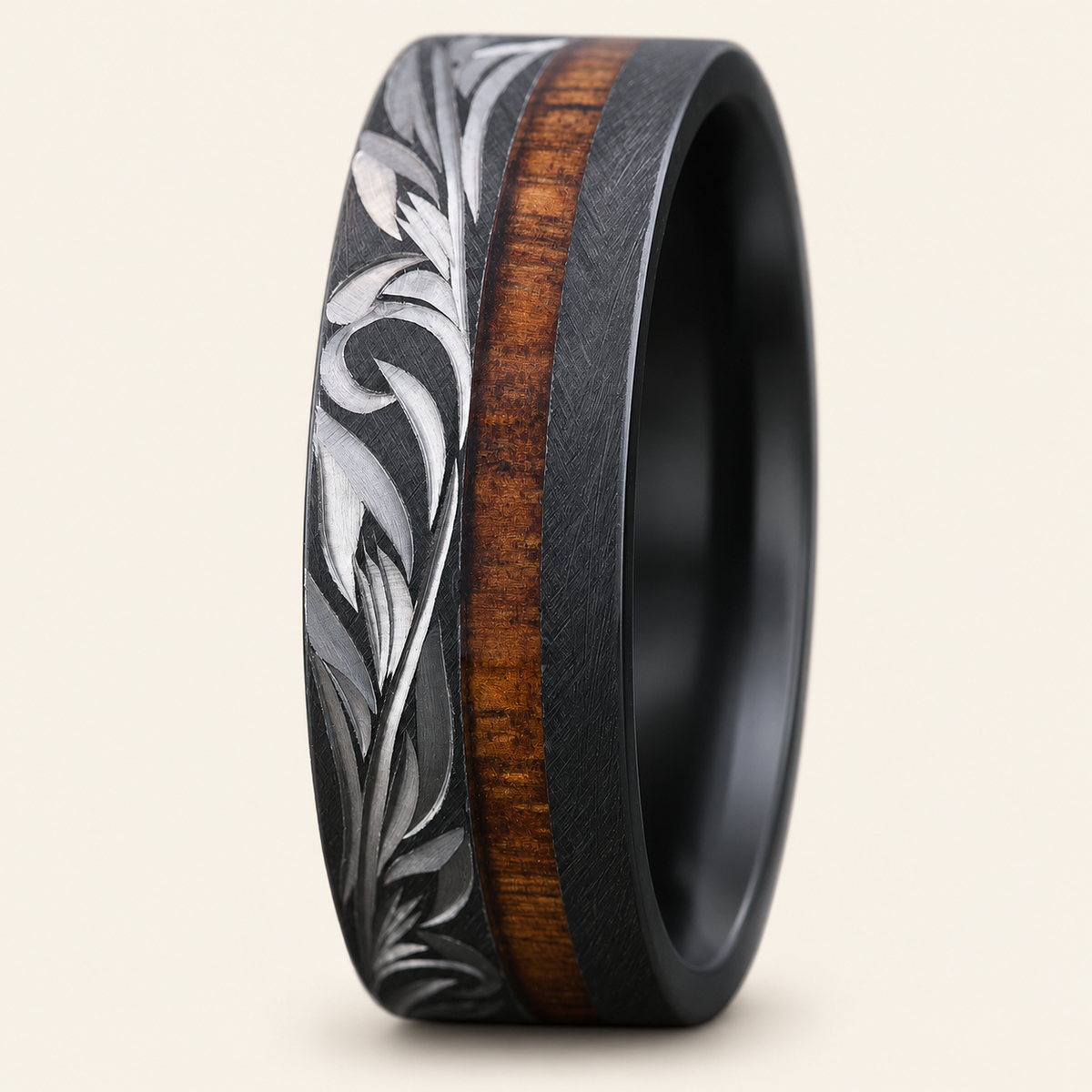
Maile: A fragrant vine traditionally woven into leis and associated with honor and lasting commitment. On rings, it usually appears as a leaf-and-vine pattern running around the band.
-
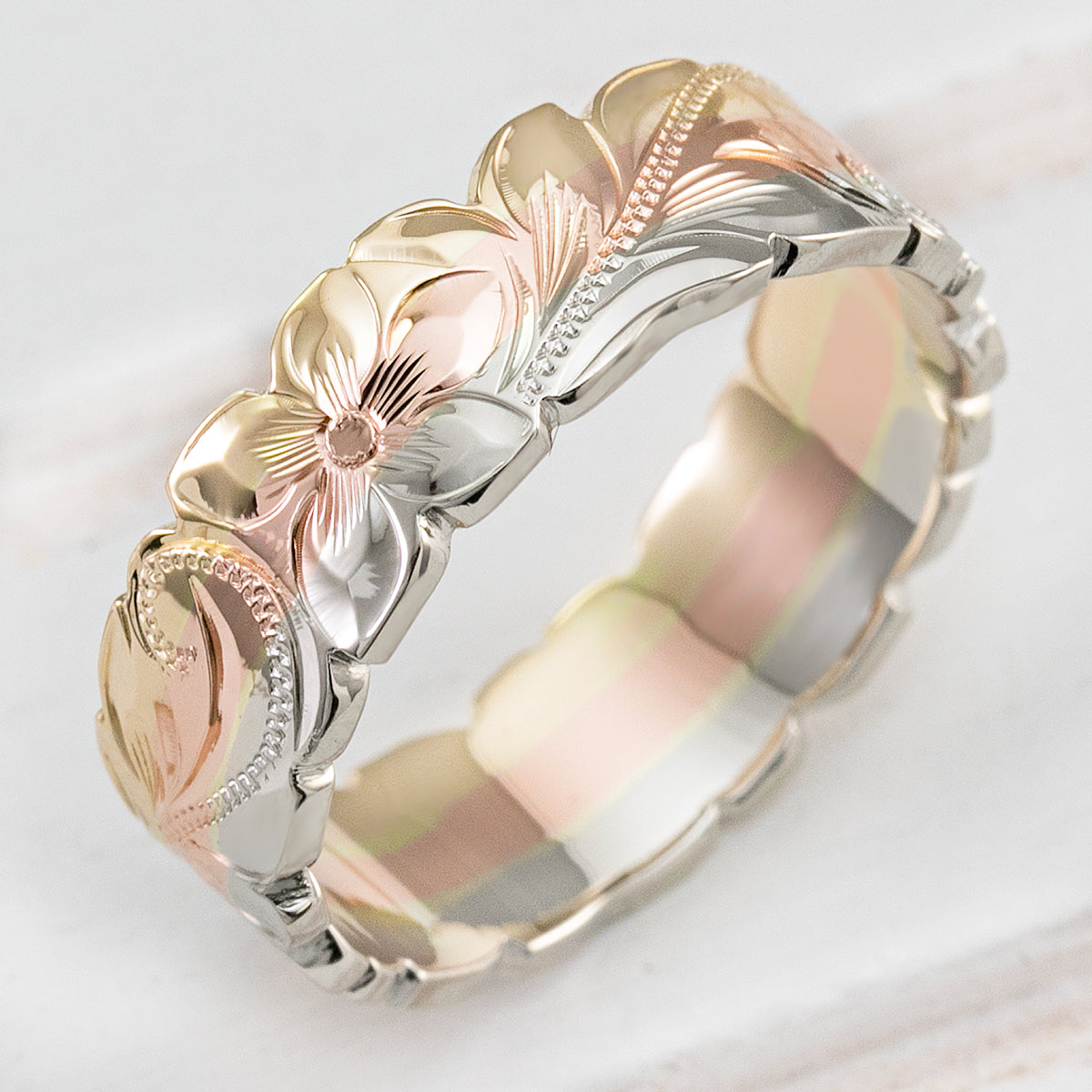
Plumeria: A flower tied to welcome and beauty, often drawn as a single bloom or repeating blossoms.
-
Scroll work: Flowing engraved patterns, including Hawaiian Old English lettering, that echo heirloom bracelets.
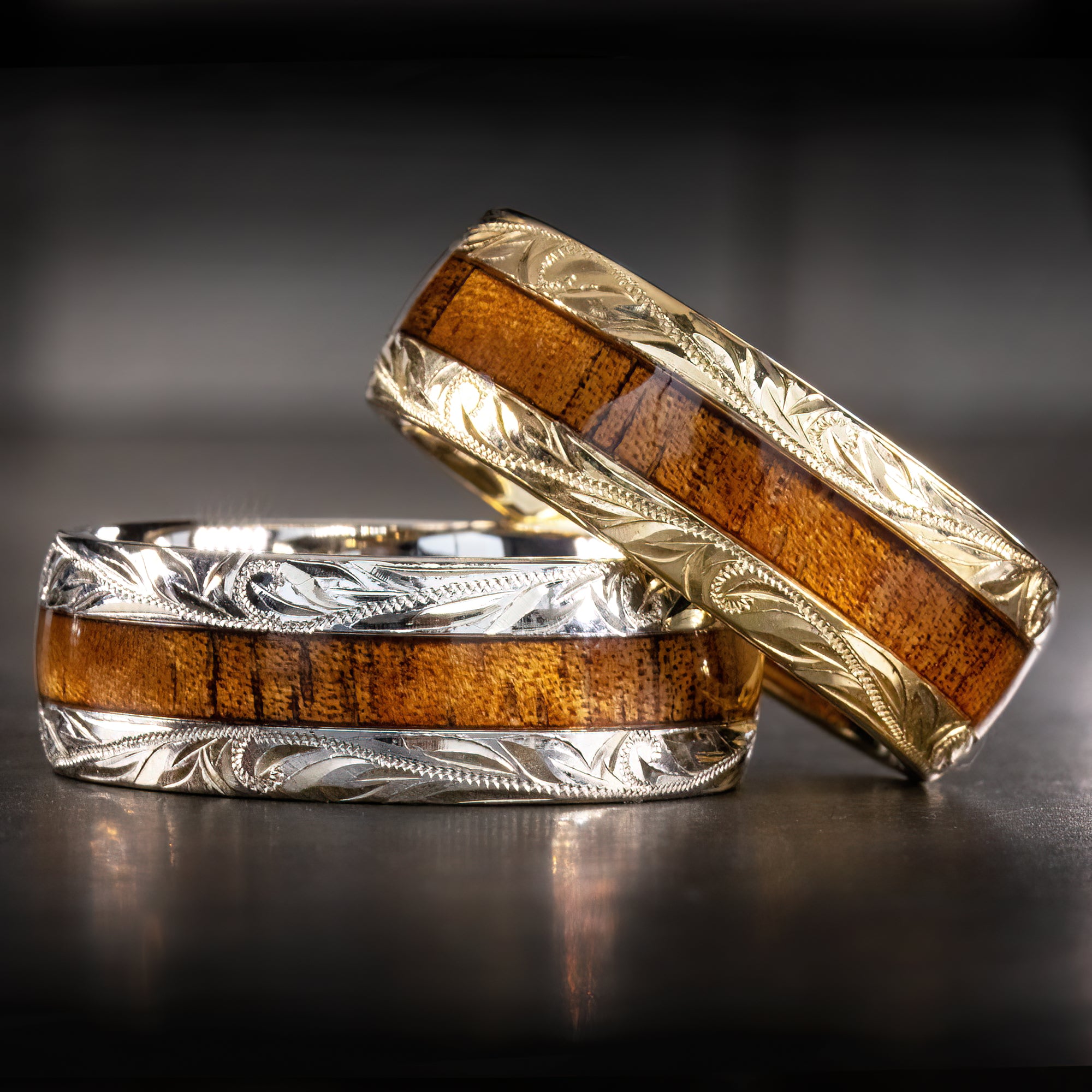
Happy Laulea, a made-in-Hawaii brand with a working studio, builds its couple sets around these motifs, including hand-engraved Maile and Hawaiian Old English designs.

What damages rings most at the beach
Three things do most of the harm.
Salt and grit. Saltwater leaves crystals behind, and sand works its way under settings and into engraving. Robinson's Jewelers advises removing your wedding ring before the beach to protect it from saltwater, sand, and moisturizers.
Sunscreen and lotion. Both leave a film on the ring. Robinson's notes that film can trap grit beneath settings, which dulls the surface over time.
Abrasion. Sand causes micro-scratches, and they show most on softer metals and high-polish finishes. Engraved patterns help here, because texture hides fine scratches better than a mirror shine does.

How each material handles salt, sand, and sun
Titanium
Titanium is the low-maintenance pick. Gold Presidents describes it as "highly resistant to corrosion, acids, saline exposure, and seawater," and Justop Jewelry adds that it's hypoallergenic and free of nickel. It's also light, which is a real comfort on a hot day.

Gold
Solid gold doesn't tarnish the way silver does, so it's a reassuring choice for a ring you'll wear daily. It's softer than titanium or tungsten, though, so expect fine scratches over time, and still rinse off salt and residue.

Sterling silver
Silver is beautiful and traditional, but it needs the most attention at the beach. Tiffany & Co.'s care guidance lists "salty air, chlorine, sulfur, humidity, perspiration, cosmetics" among the causes of tarnish. If you love silver, plan to wipe it down after every beach day, or save it for the ceremony and indoor wear.

Tungsten carbide
Tungsten is among the most scratch-resistant options, which suits active couples. The trade-off is brittleness. Tungsten Rings & Co. describes it as "extremely hard and highly scratch-resistant" but notes it can "chip, crack, or shatter completely" under a sharp impact. Scratch-resistant doesn't mean scratch-proof, and it doesn't mean impact-proof.

Koa wood
Koa is the most recognizable Hawaiian material, valued for its warm, shifting grain. It's also the one that wants the most care around water. Tulsa Body Jewelry's guidance is blunt: "Never soak wood jewelry in water or any other liquid solution." Other wood-ring makers advise limiting water exposure and oiling the wood occasionally. Wear a Koa ring for the ceremony and photos, then take it off before swimming.

Koa is often set as an inlay inside a metal band, such as titanium or gold. That gives you the Hawaiian look with a more forgiving outer shell, though the wood itself still needs protecting.

Choosing a matching set that photographs well
-
Match visual rhythm, not just materials. If one band carries dense Maile engraving, a plain band beside it can look unrelated. Repeat the same motif at a lighter density for a smaller or simpler ring.
-
Mind the width. Wider bands look bolder in bright sunlight and show off engraving better, but they feel tighter in heat. Many couples choose different widths in the same finish.
-
Check the edges. Comfort-fit (rounded) interiors are easier to wear through long travel days.
-
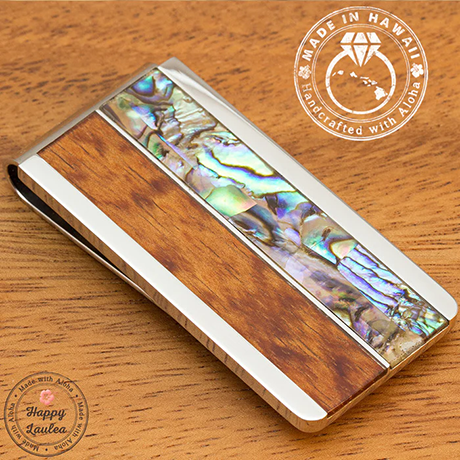
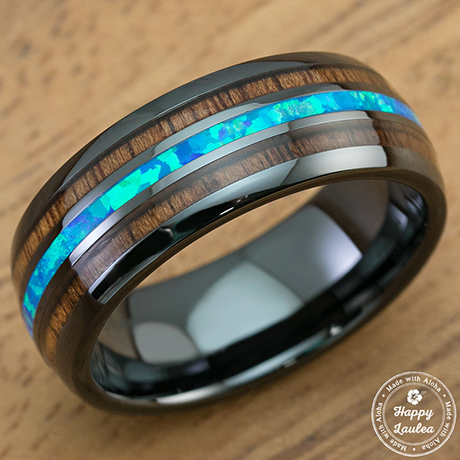
Think about inlays. Opal, meteorite, abalone shell, and black jade add color and a personal touch. They're also the spots where sand and lotion collect, so give them a gentle rinse and a soft cloth after each beach day.

Picking by priority
|
If you want |
Consider |
|---|---|
|
Lowest maintenance |
Titanium outer band, minimal exposed porous inlay |
|
Strongest Hawaiian heirloom feel |
Koa wood with hand-engraved motifs, plus a strict care routine |
|
Scratch resistance for active wear |
Tungsten carbide, with realistic expectations about impact |
|
Classic warmth and daily wear |
Solid gold with Maile or Plumeria engraving |

A beach-day care plan
-
Before the beach: Take your rings off for swimming and ocean dips, and keep them in a zipped pouch or hotel safe.
-
After exposure: Rinse right away under clean, lukewarm tap water to wash off salt crystals, sand, and residue. Robinson's recommends this, followed by drying thoroughly with a soft, lint-free cloth.
-
For Koa: Dry quickly, never soak, and oil the wood occasionally to keep it conditioned.
-
Weekly during travel: Gently clean away any sunscreen film around engraving and inlays.
-
Afterward: Have your rings checked if you notice grit in settings, a dull finish, or any change in wood inlay.

Sizing for warm weather and wide bands
Hands swell in heat, so measure at room temperature, and measure two or three times and average the results. If you're between sizes, consider your knuckle, since the ring has to slide over it. Wide bands are the place to be careful: they often need a slightly larger size than a narrow band. If you're ordering before you travel, get sizing right early so you aren't solving it on the island.

FAQs
Can you wear Hawaiian rings in the ocean? Titanium and gold handle it better than silver or Koa, but many jewelers still recommend removing rings first. Rings also slip off easily in cool water.
Is sterling silver good for a beach wedding? It works for the ceremony, but it tarnishes faster in salty air and needs regular wiping.
Does titanium corrode in saltwater? It's highly resistant to corrosion from seawater.
Are tungsten rings scratch-proof? No. They resist scratches very well but can chip or crack under a hard impact.
How do I care for Koa wood at the beach? Keep it out of the water, rinse and dry it quickly if it's exposed, and oil it occasionally.

Your pre-order shortlist
Before you buy, check three things: the material fits how you'll live, the two bands share a motif and visual weight, and you have a simple rinse-and-dry routine ready for beach days. Then choose rings you'll actually want to wear every day, not only on the wedding day.
If you'd like Maile, Plumeria, or Hawaiian Old English engraving in Koa, gold, silver, or titanium, Happy Laulea makes couple sets in Hawaii, and you can tour the studio by appointment if you're visiting the islands.