




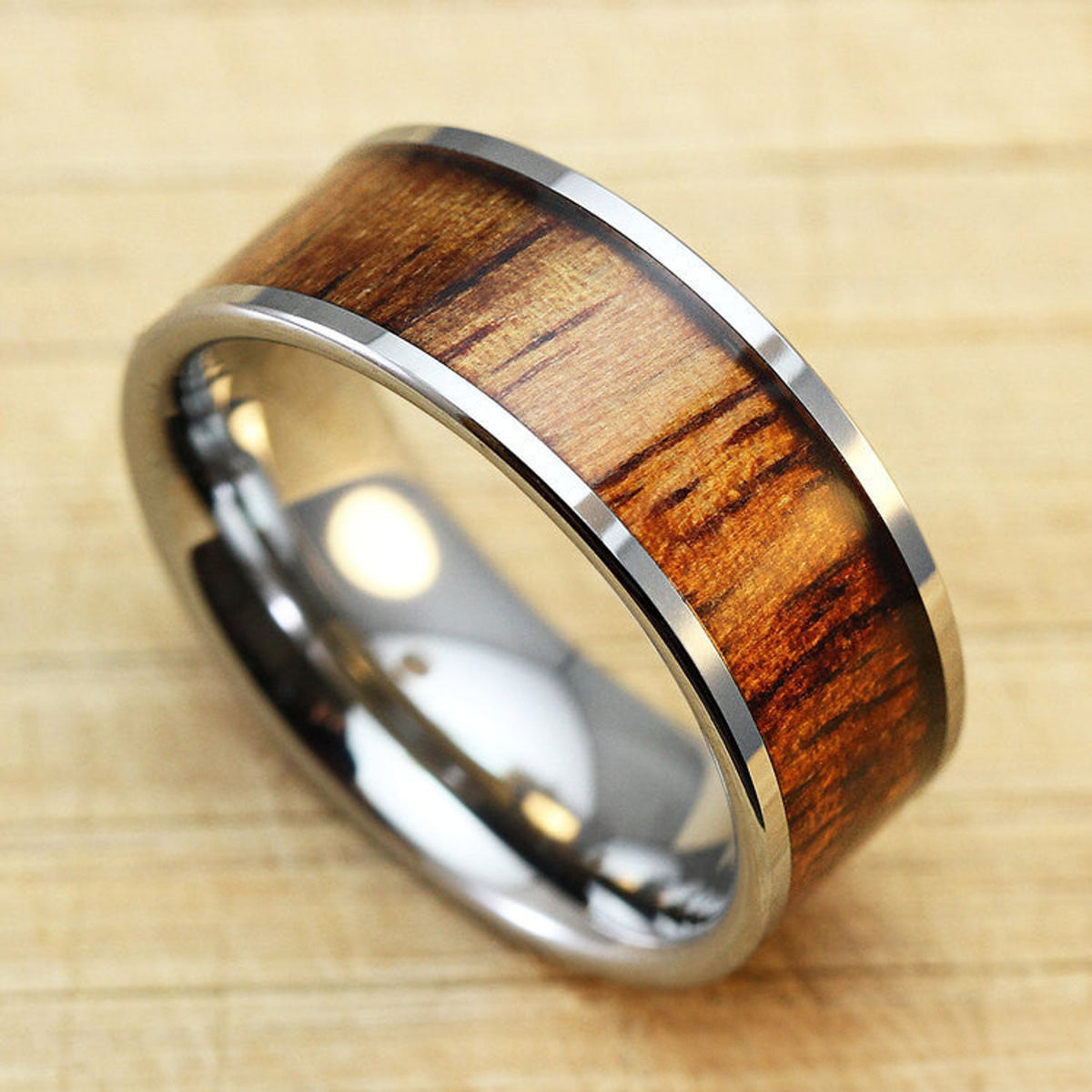
Is Hawaiian Koa Sustainable? A Buyer's Guide to Ethical Sourcing
Koa (Acacia koa) can be sustainable and ethically sourced, but the word "koa" on a product page doesn't prove it. Whether a specific piece qualifies depends on three things you can check: the wood was gathered legally, the forest it came from has a plan to recover, and the seller can trace the wood back to its source. This article walks through each one so you can judge any koa ring, bracelet, or wedding band on its evidence.
For many buyers of Hawaiian-inspired jewelry, koa carries real meaning. It's a native tree, tied to place and heritage. That's exactly why a vague "sustainably sourced" label deserves a closer look.

What Hawaiian koa is, and why origin comes first
Koa is a tree species endemic to Hawaii, meaning it grows naturally nowhere else. The USDA Forest Service describes it as "of immense ecological and economic importance" in its publication Koa (Acacia koa) ecology and silviculture.

That matters for buyers because "koa" is sometimes used loosely. Look-alike woods and imported substitutes with similar color and curl can be sold under the name. Before any sustainability question makes sense, you need to know the wood is Hawaiian koa in the first place. A seller who can't say which island or region the wood came from has already skipped the first step.

The legal framework for harvesting koa in Hawaii
Hawaii's Department of Land and Natural Resources, Division of Forestry and Wildlife (DLNR/DOFAW) sets the baseline for regulated activity in state forests. Its permit guidelines state that "more than one permit may be required depending on the location and type of activity, as well as the species impacted by the activity." The same page asks applicants to submit requests at least 90 days before field work begins, unless a specific permit says otherwise.
For State Forest Reserves, gathering non-listed species or common materials is regulated through a Collection Permit, which is free. If the quantity looks commercial, DLNR may issue a Commercial Harvest Permit for a fee. Commercial permits are also limited: no more than one within a 30-day period, or six in a calendar year.
Two takeaways follow. Legal harvest is a real, documented process rather than an honor system. And the right paperwork varies by land type, location, and species, so a seller's answer should be specific to their situation. (This is general information, not legal advice. DLNR/DOFAW is the authority to consult.)

How private land stewardship supports long-term koa forests
Much of Hawaii's forest sits on private land. The state's Forest Stewardship Program (FSP), run by DOFAW, "provides planning and financial assistance to private forest landowners to promote active long-term stewardship, enhancement, conservation, and restoration of Hawaii's forests."
Supported objectives include native species restoration and protection, and watershed, riparian, and wetland protection. To be eligible, landowners need at least 5 contiguous acres of forested or formerly forested land and must intend to actively manage at least 5 acres.
Enrollment in FSP isn't a koa certification, and it doesn't prove any particular board was harvested responsibly. What it does show is a landowner working from a management plan. When wood comes from land under that kind of plan, the "long-term forest strategy" claim is more believable than when it comes from an unnamed source.

What koa sustainability depends on ecologically
The USDA Forest Service notes that koa has been "mined from local forests for its wood for more than 100 years," and that extensive koa-dominated forests were converted to grazing lands. It also observes that there's now "substantial interest in restoration and management of koa forests."
Sustainability, then, isn't just about how much wood is taken. It's about whether the forest regenerates afterward. Koa forests recover through natural disturbance gaps and through managed silviculture and restoration, and that takes planning, time, and protection from grazing pressure. You don't need to be a forester to use this. You only need to ask whether a seller can describe what happens to the land after harvest.

Ethical sourcing pathways: live harvest vs. salvage
Two pathways come up most often in koa sourcing conversations:
-
Managed or permitted harvest. Trees are taken under the applicable permits or a landowner's management plan, ideally with restoration built in.
-
Dead, downed, or storm-damaged salvage. Wood that's already fallen is generally viewed as more defensible, since no healthy tree is cut for it.

Salvage still has to be legal and traceable. Wood taken from protected land without authorization isn't ethical just because the tree was down, and a vague "fallen tree" story can be used to launder poorly documented material. The defensible version names the area, the land context, and the authorization behind it.

Where FSC certification fits, and where it doesn't
The Forest Stewardship Council (FSC) offers two relevant certifications. Forest Management certification provides "third-party audited assurance" that operations meet FSC standards. Chain of Custody certification "verifies that products are handled correctly at every stage of production."
Independent audits are valuable because they replace a seller's word with an outside check. But availability varies by species, region, and supply chain, and many small-batch koa products won't carry FSC claims. Absence of FSC doesn't equal unethical, and presence of an FSC logo doesn't answer every question about a specific piece. The useful move is to ask which certification applies and what it covers. Certification works best alongside clear provenance, not instead of it.

A 10-minute checklist for testing koa claims
Before buying, ask the seller:
-
Is this Hawaiian-grown Acacia koa, and from which island or area?
-
Was it harvested, or salvaged from fallen wood?
-
What land type did it come from (private, state forest reserve), and what authorization applied?
-
Is there a management or restoration plan, such as FSP participation?
-
Can you trace the wood from source to finished piece?
-
If you cite a certification, which type is it, and who holds it?
Red flags include evasive answers, origin stories that change between replies, "100% sustainable" claims with no documentation, and no way to confirm what "koa" means in the listing.

Common misconceptions about ethical koa
"Certified means always ethical." Certification covers specific standards. Confirm whether it's forest management or chain of custody.
"Koa is rare, so it must be illegal or automatically sustainable." Neither follows. Legality and sustainability depend on the land, permits, and management involved.
"All koa products are FSC." They aren't. Chain of custody requires every handler in the supply chain to participate.

Choosing koa jewelry with confidence
Ethical koa can be assessed. Look for legal harvest, a forest with a recovery plan, and a seller who can trace the wood. FSC reports that 76% of surveyed consumers believe strongly in independent certification, and that instinct is sound, as long as you pair it with direct questions.

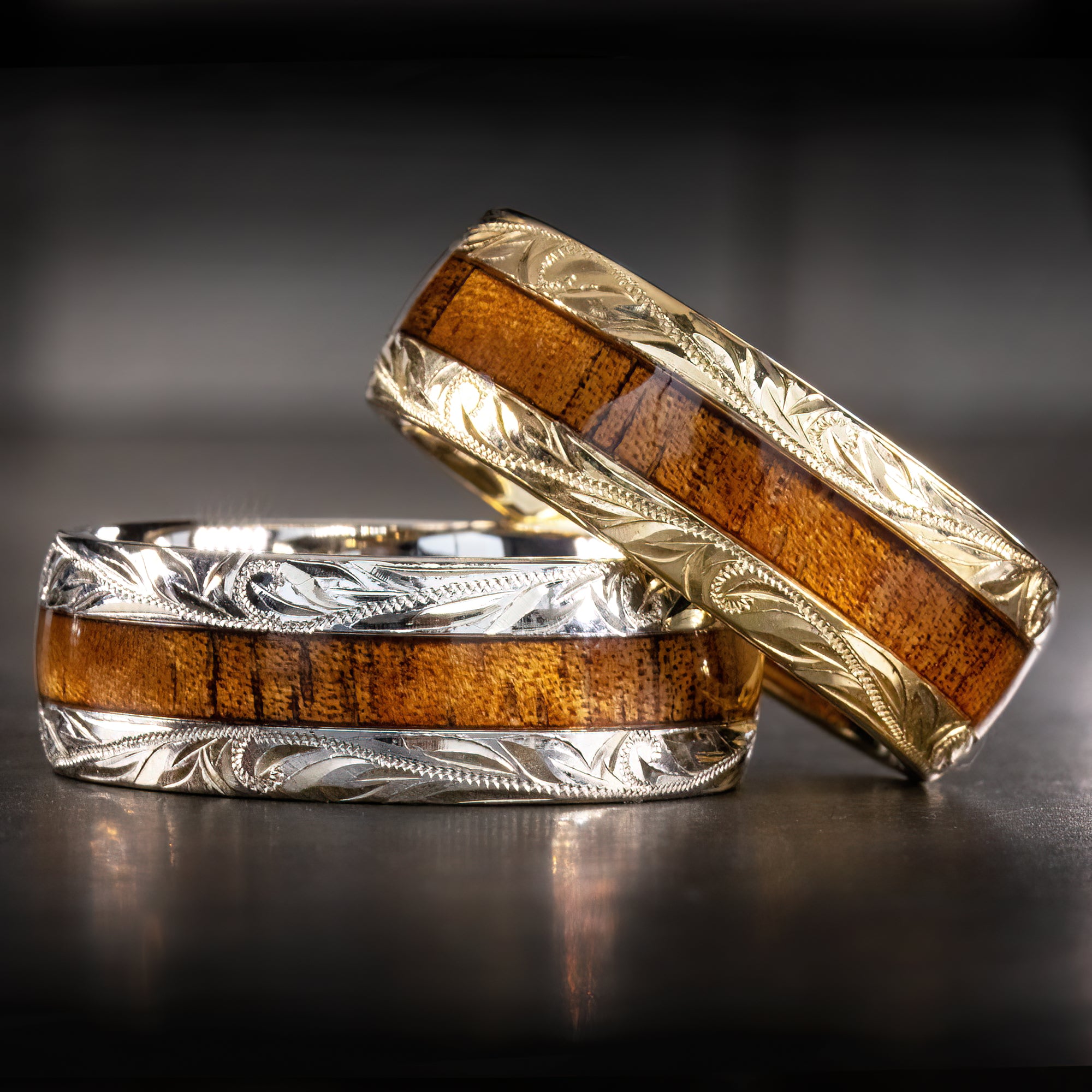
At Happy Laulea, we craft koa wood rings and matching wedding bands in our Hawaii studio, and our team is happy to talk through materials with you. Call or text with questions, or visit the studio by appointment. Whatever you buy and wherever you buy it, the checklist above will help you choose a piece you feel good wearing for years.