

Promise Ring vs Engagement Ring: Differences, Meaning, & How to Choose
Two rings, both worn on a finger, both meant to say "I'm serious about you." So why does one come with a proposal speech and the other doesn't?
Here's the short version: a promise ring marks a commitment the two of you define for yourselves. An engagement ring marks one specific thing, that you're getting married. Everything else, the cost, the design, which hand you wear it on, follows from that one distinction.
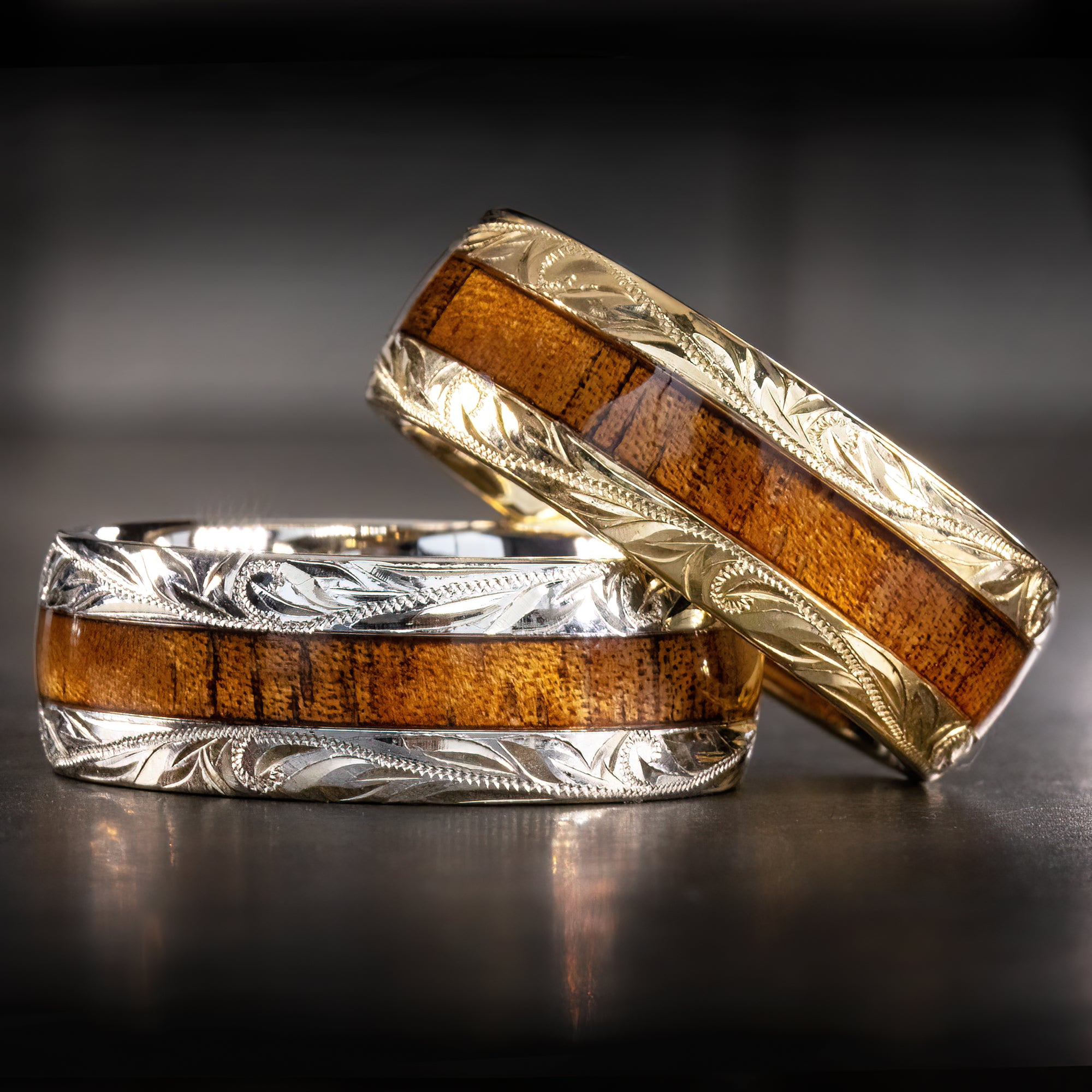
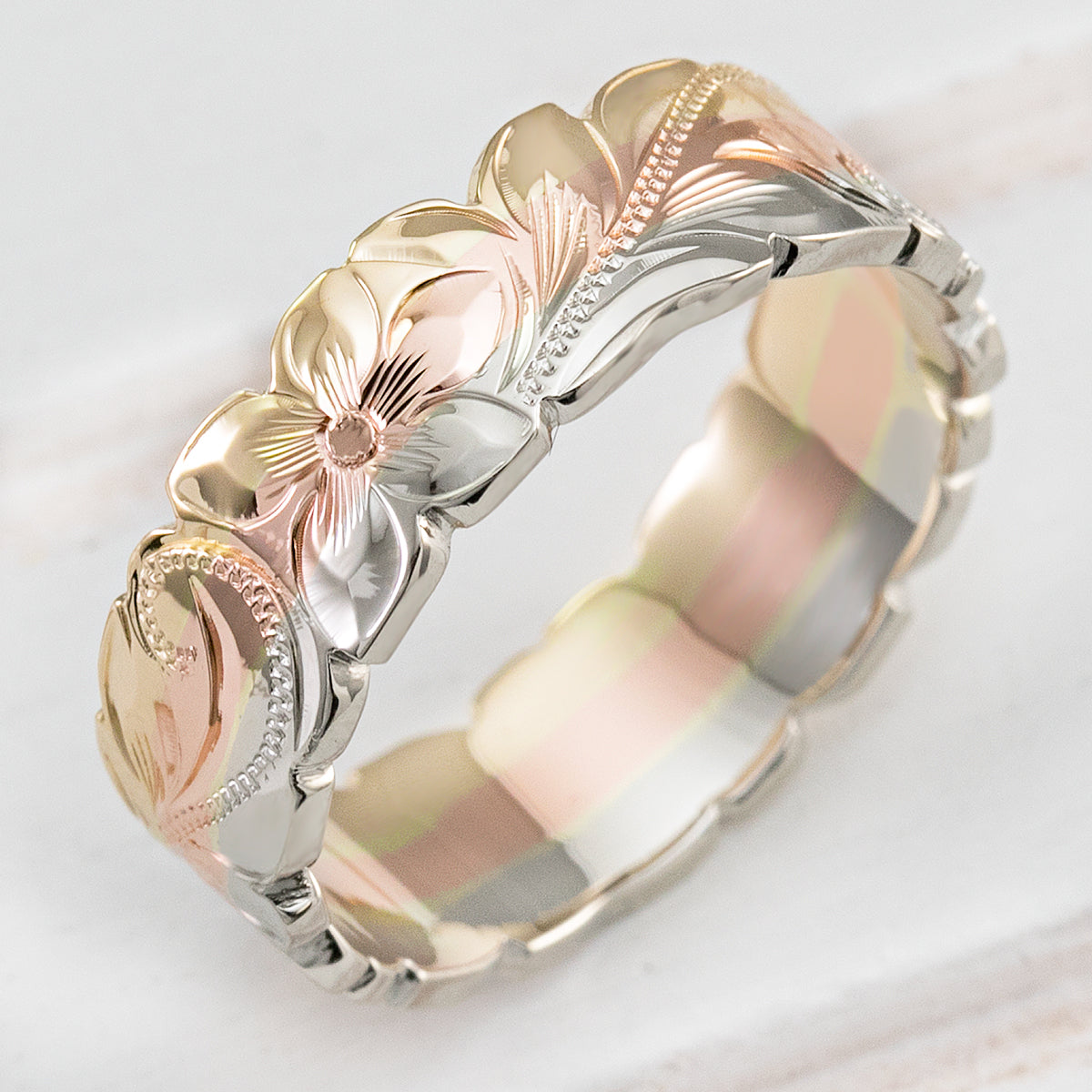
Shop Happy Laulea's collection of engagement rings and promise rings.
Quick Answer: Which Ring Do You Need?
Choose a promise ring if you're serious but not ready to talk marriage yet, or if you want to mark a milestone (an anniversary, a move, surviving a stretch of long distance) without implying a wedding is coming. Choose an engagement ring if you've already had the marriage conversation and you're ready to propose, or you've been proposed to and said yes.
The difference isn't the ring itself. Plenty of promise rings and engagement rings look nearly identical on the hand. The difference is what you and your partner have agreed it means.
If you're still unsure which one fits your situation, the table below breaks down the practical differences, cost, timing, finger placement, so you can match the ring to where you actually are rather than where you think you're supposed to be.

Promise Ring vs Engagement Ring at a Glance
| Promise Ring | Engagement Ring | |
|---|---|---|
| Meaning | Personal commitment, defined by the couple | Formal intent to marry |
| Typical cost | $100-$1,500 | $2,000-$15,000+ |
| Timing | Any point in the relationship | At or after a proposal |
| Finger | Usually right hand, but no fixed rule | Left ring finger (Western tradition) |
| Center stone | Optional, often small or none | Usually a prominent diamond or gemstone |
| Public or private | Often private | Public, socially recognized |
| Requires a proposal | No | Yes, or an equivalent formal agreement |
What Is a Promise Ring?
A promise ring is jewelry given to mark a commitment that isn't marriage, at least not yet. That's the whole definition, and it's deliberately loose. The ring doesn't come with a script. What it means is whatever the two people wearing (or gifting) it agree it means.
In practice, that tends to fall into a handful of buckets. Some couples use it as a pre-engagement signal, a way of saying "we're heading toward marriage, we're just not there yet." Others use it to mark exclusivity early in a relationship, long before marriage is even on the table. It shows up a lot in long-distance relationships too, as something tangible to hold onto when the person isn't physically there. And some people buy one for themselves, which sounds odd until you think about it as no different from any other piece of jewelry that reminds you of something you value.
Promise rings aren't new, either. Posy rings, engraved with short verses of devotion, were common in 15th and 16th century Europe. Later, in the Georgian and Victorian eras, people wore acrostic rings, where the first letters of a row of gemstones spelled out a word like "dearest." The diamond-centric engagement ring most people picture today is, by comparison, a fairly recent invention.
What it commonly signals
Fidelity. Exclusivity. A shared hope for the future that hasn't been formalized into a wedding date. None of these require an audience. That's part of the point, a promise ring is usually a conversation between two people, not an announcement to everyone else.
Common styles and price range
Thin bands. Small stones, or none at all. Birthstones and engraved initials show up constantly, because a promise ring's value tends to live in the personal detail rather than the size of the stone. Expect to spend somewhere between $100 and $1,500 for something in fine jewelry, though there's no rule that says it needs to cost that much.

What Is an Engagement Ring?
An engagement ring does one job: it announces that a wedding is coming. It's given during or shortly after a proposal, and once it's on, the people around you generally read it correctly without needing an explanation.
That's the real functional difference. A promise ring's meaning is negotiated between two people. An engagement ring's meaning is understood by pretty much everyone, which is exactly why it carries more social weight, and, frankly, why couples treat it as a bigger purchase.
What it signals
A decision that's already been made. Not "we're thinking about it," but "we're doing this." It's also usually the ring that kicks off the more public parts of getting married, telling family, setting a date, the whole chain of events.
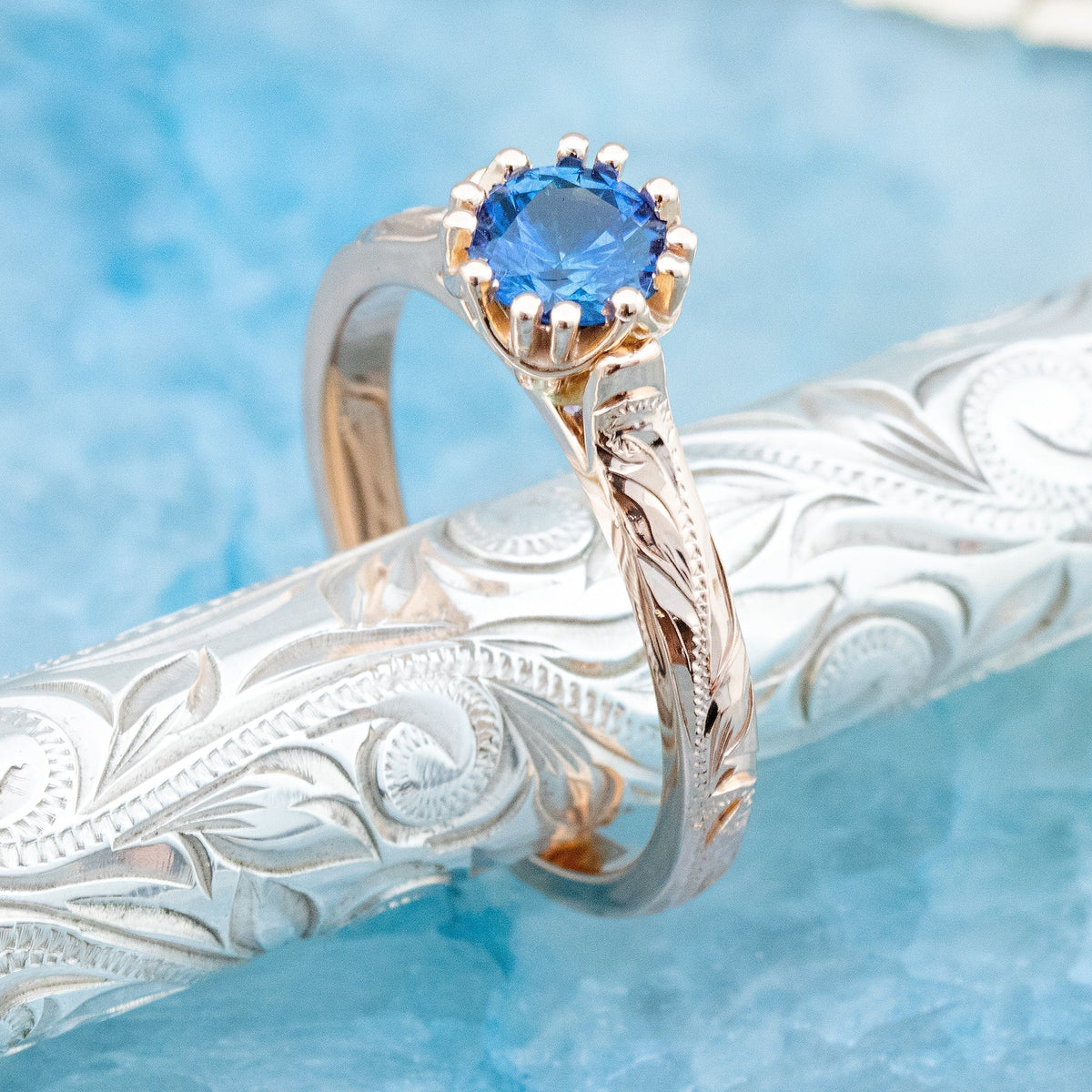
The center stone tends to be the defining feature. Diamonds still dominate, though sapphires and other gemstones show up plenty. If you're the one shopping for the stone, cut quality matters more than most people expect, a well-cut diamond throws light efficiently and looks brighter than a larger but poorly cut stone. Carat weight gets all the attention, but it's not what makes a ring look impressive on the hand.
Common styles and price range
Solitaires, halos, three-stone settings, vintage-inspired designs, there's more variety here than people expect, but nearly all of them are built around a visible center stone, most often a diamond. Budgets vary enormously depending on stone size and quality, but a realistic range for a setting plus a decent center diamond runs $2,000 to $15,000, sometimes more. Lab-grown diamonds have pulled that range down for a lot of buyers, since they can run 20-40% less than a mined stone of similar size.

Key Differences Between a Promise Ring and an Engagement Ring
Meaning and symbolism
A promise ring says "I'm serious about you," full stop, with the specifics left open. An engagement ring says "I want to marry you," and there's not much ambiguity left after that.
Cost
Promise rings generally land in the $100-$1,500 range. Engagement rings start around $2,000 and climb well past $10,000 depending on the stone. That gap isn't really about how much either partner cares. It reflects what each ring is expected to do: an engagement ring is meant to be worn for decades and often gets treated as an investment piece, while a promise ring is closer to a meaningful everyday accessory.
Design and stone size
Promise rings skew simple: thin bands, modest or absent stones, engraving over sparkle. Engagement rings are built to be noticed, with a center stone that's typically 0.5 carats or larger and a setting designed to show it off. None of this is a hard rule, plenty of engagement rings are understated and plenty of promise rings have real diamonds in them, but it's the general pattern across most retailers' catalogs.
Finger placement
This is where people get tripped up, so it gets its own section below.

Which Finger Does a Promise Ring Go On?
There's no official rule, but there's a common-sense default: the right-hand ring finger, specifically because it keeps the left-hand ring finger open for an engagement ring later. That's not tradition so much as practicality, it avoids the awkward moment where someone assumes you're engaged when you're not.
Some people wear a promise ring on the left hand anyway, and some wear it on a different finger entirely, or on a chain around the neck. All of that is fine. If there's any risk of confusion, and there usually is, the easiest fix is just telling people what the ring means rather than relying on which hand it's on to do the explaining.
Engagement rings, by contrast, do follow a tradition: the left ring finger in most Western cultures, based on the old (and inaccurate) belief that a vein there runs straight to the heart. It's folklore, not anatomy, but the custom stuck.
When Should You Give a Promise Ring?
There's no set timeline, and if anyone tells you there's a required number of months you need to date first, they're guessing. That said, a few patterns show up often enough to be worth naming.
You'll sometimes hear about a "three month rule," the idea that if you've only been dating a few months, a ring (any ring) is premature. It's not a real rule, more a shorthand people use to flag that jewelry given too early in a relationship can come across as pressure rather than affection. The actual signal to watch isn't the calendar, it's whether both people are on the same page about what the relationship is. A promise ring after three months between two people who've talked openly about commitment reads very differently from the same ring given as a surprise to someone who wasn't expecting it.
Good moments tend to be ones that already carry meaning: an anniversary, the start of a long-distance stretch, a milestone you're both marking anyway. The ring works best when it reflects something that's already true about the relationship, not when it's used to manufacture a commitment that hasn't happened yet.
If you're giving one, say what it means before you hand it over, not after. Something as simple as "this isn't a proposal, it's how I want to mark where we are right now" does more work than the ring itself. It also gives your partner room to react honestly instead of guessing what you intended and playing along.
And no, you don't need to get down on one knee. That gesture is reserved for proposals. Doing it for a promise ring is a fast way to create the exact confusion the ring is supposed to avoid.

Can a Promise Ring Become an Engagement Ring?
Yes, and it happens often. If a couple decides to get engaged, the promise ring can simply be redefined as the engagement ring, no new purchase required. Some people prefer to buy a new ring and move the promise ring to a different finger, a necklace, or a keepsake box. Neither approach is more "correct" than the other.
What matters is that both people agree on what changed. A ring quietly shifting meaning without a conversation is how you end up with two different stories about your own relationship. Say it out loud: "this is our engagement ring now" closes the loop.
After an engagement, the promise ring doesn't have to disappear. Plenty of people keep wearing it, just on a different hand or finger, or on a chain, as a small nod to where things started. Some keep it in a box as a keepsake instead, which is just as valid. If you do want to wear both rings together, it's worth having a jeweler check that the settings sit comfortably side by side, since some designs rub against each other or put pressure on the stones over time.
Promise Ring vs Engagement Ring vs Wedding Ring
It's worth zooming out one more step, because the confusion doesn't always stop at two rings. A wedding ring (or wedding band) is a third, distinct thing: it's exchanged during the ceremony itself, worn on the left ring finger alongside the engagement ring, and represents the legal and ceremonial completion of the marriage rather than a step toward it.
| Promise Ring | Engagement Ring | Wedding Ring | |
|---|---|---|---|
| When given | Any point in the relationship | At a proposal | During the wedding ceremony |
| What it means | A defined-by-you commitment | Intent to marry | Marriage itself |
| Typical cost | $100-$1,500 | $2,000-$15,000+ | $500-$5,000+ |
| Worn with | Often alone | Later paired with wedding band | Alongside engagement ring |
Put the three side by side and the progression makes more sense: promise ring says "I'm serious," engagement ring says "we're getting married," wedding ring says "we did." None of them substitute for the others, and none of them require the one before it, some couples skip the promise ring stage entirely and go straight to engagement, which is completely normal.
Finger placement is where all three tend to converge eventually. The wedding band goes on the left ring finger during the ceremony, sitting flush against the engagement ring, which is why some couples choose their engagement ring setting with the eventual wedding band pairing already in mind. A promise ring, wherever it started out, usually ends up somewhere else on the hand by the time both of the other two rings are in the picture.
Frequently Asked Questions
Is a promise ring the same as an engagement ring?
No. A promise ring marks a personal commitment that the couple defines themselves. An engagement ring marks a specific, formal intent to marry. They can look similar, but they're not interchangeable, and treating a promise ring like an engagement ring (or vice versa) is usually where the confusion starts.
Can I propose with a promise ring?
Not really, at least not without causing confusion. A proposal is what turns a ring into an engagement ring, regardless of what the ring was originally intended to be. If you're planning an actual proposal, calling it a "promise ring" moment undersells what you're doing and can leave your partner unsure what just happened.
Do you kneel when giving a promise ring?
No. Getting down on one knee is proposal body language, and doing it for a promise ring will almost certainly be read as a marriage proposal whether you meant it that way or not. Keep the moment low-key if you want the ring's meaning to stay low-key too.
How serious is a promise ring, really?
As serious as the two people involved decide it is. That's not a dodge, it's the actual answer. A promise ring given after a real conversation about commitment carries weight. One given on a whim, without any shared understanding of what it means, is just jewelry. The ring doesn't do the work, the conversation does.
Is a promise ring the same as a pre-engagement ring?
Usually, but not always. "Pre-engagement ring" specifically implies both people expect to get engaged later, they're just not there yet. "Promise ring" is the broader term and can represent any kind of commitment, not necessarily one aimed at marriage. When someone uses "pre-engagement ring," they're describing one specific type of promise ring.
Which Ring Is Right for You?
Start with the conversation, not the jewelry store. If you're committed but marriage isn't the immediate plan, a promise ring fits, and it doesn't need to cost much to mean something. If you've already agreed that marriage is where you're headed and you're ready to make it official, an engagement ring is the one that communicates that clearly to everyone else, not just to each other.
Neither ring is a smaller gesture than the other. They just answer different questions.