

Koa Wood Symbolism in Hawaiian Culture: Meaning & History

Koa wood is one of those materials where the name says everything. Before a single board is shaped or ring is set, the word itself carries centuries of meaning rooted in the Hawaiian language and a rich history of cultural use. If you've ever wondered what koa wood symbolizes in Hawaiian culture, the answer goes deeper than the single word "warrior" that gets repeated across the internet. Here's the full picture.
What koa is: the tree and the wood
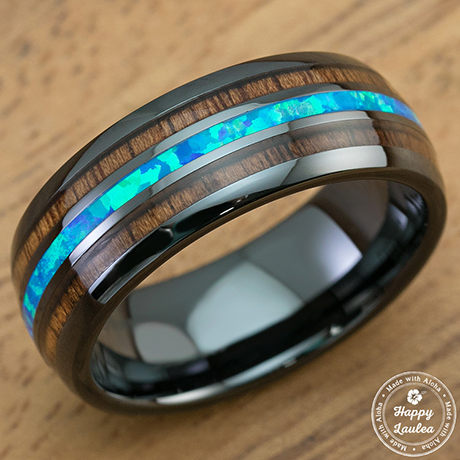
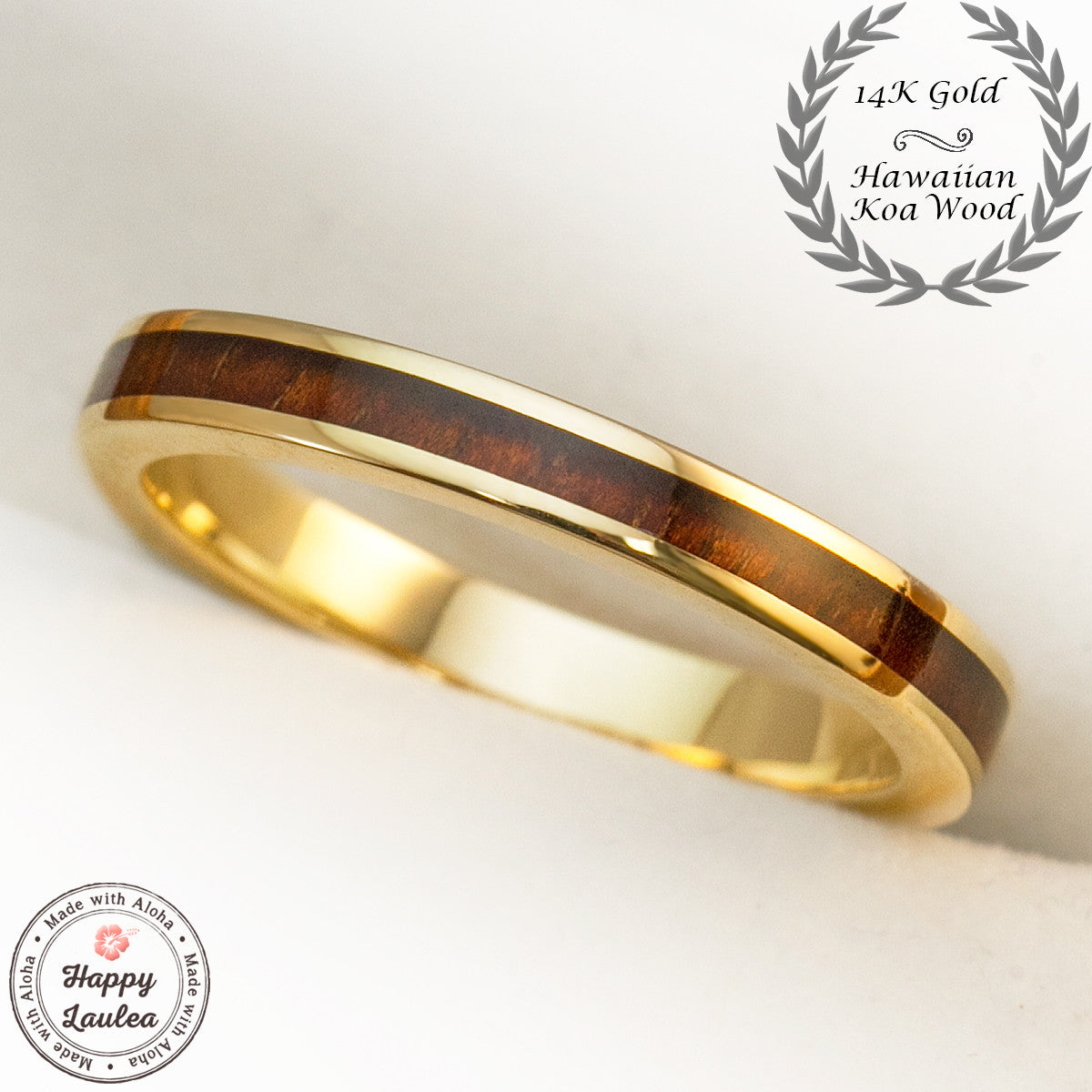
Koa refers to Acacia koa, a native Hawaiian hardwood tree found primarily in the forests of the Big Island, Maui, and Kauai. It's one of the largest native trees in Hawaii, and its wood is immediately recognizable by its warm golden-brown tones and dramatic curling grain. Those distinctive figure patterns make no two pieces identical, which is part of why koa has been prized for both functional and ornamental use for so long.
The symbolism of koa wood in Hawaiian culture comes from two places: the literal meaning of the Hawaiian word "koa," and the historically significant ways the wood itself was used.
The Hawaiian word "koa" means more than "warrior"
Most websites summarize koa's meaning as simply "warrior." That's accurate, but it's incomplete. The Nā Puke Wehewehe ʻŌlelo Hawaiʻi (the authoritative Hawaiian dictionary resource at Ulukau/Wehewehe) gives two distinct entries:
-
koa₁: "Brave, bold, fearless, valiant; bravery, courage."
-
koa₂: "Soldier, warrior, fighter; military, hero, martial."
The distinction matters. The first entry is about character: the inner qualities of fearlessness and courage. The second is about role: the warrior, soldier, and hero in action. Together, they paint a picture of both who a person is and what they're capable of. That combination of inner courage and outward strength is what koa wood has come to represent, and it's why the material resonates so strongly as a choice for jewelry meant to mark life's most meaningful moments.

Historical uses and the aliʻi connection
According to the Significance of Koa Wood page on Hawaii.gov (Lieutenant Governor Sylvia Luke's virtual tour), koa was "the wood of Hawaiian royalty." It was originally used to craft ocean-going canoes, surfboards, spear handles, and ukuleles. That list alone tells a story: canoes for navigation across thousands of miles of open ocean, spears for protection and conflict, surfboards for recreation and skill, instruments for cultural expression. These weren't everyday objects. They required mastery to make and mastery to use.
Koa's association with the aliʻi (Hawaiian chiefs and royalty) grew from this context. The wood was valued and used in elite settings, woven into the tools of leadership, exploration, and identity. Over time, that association with high-status objects became part of the wood's cultural identity. Koa didn't just grow in Hawaiian forests; it grew into Hawaiian cultural memory.
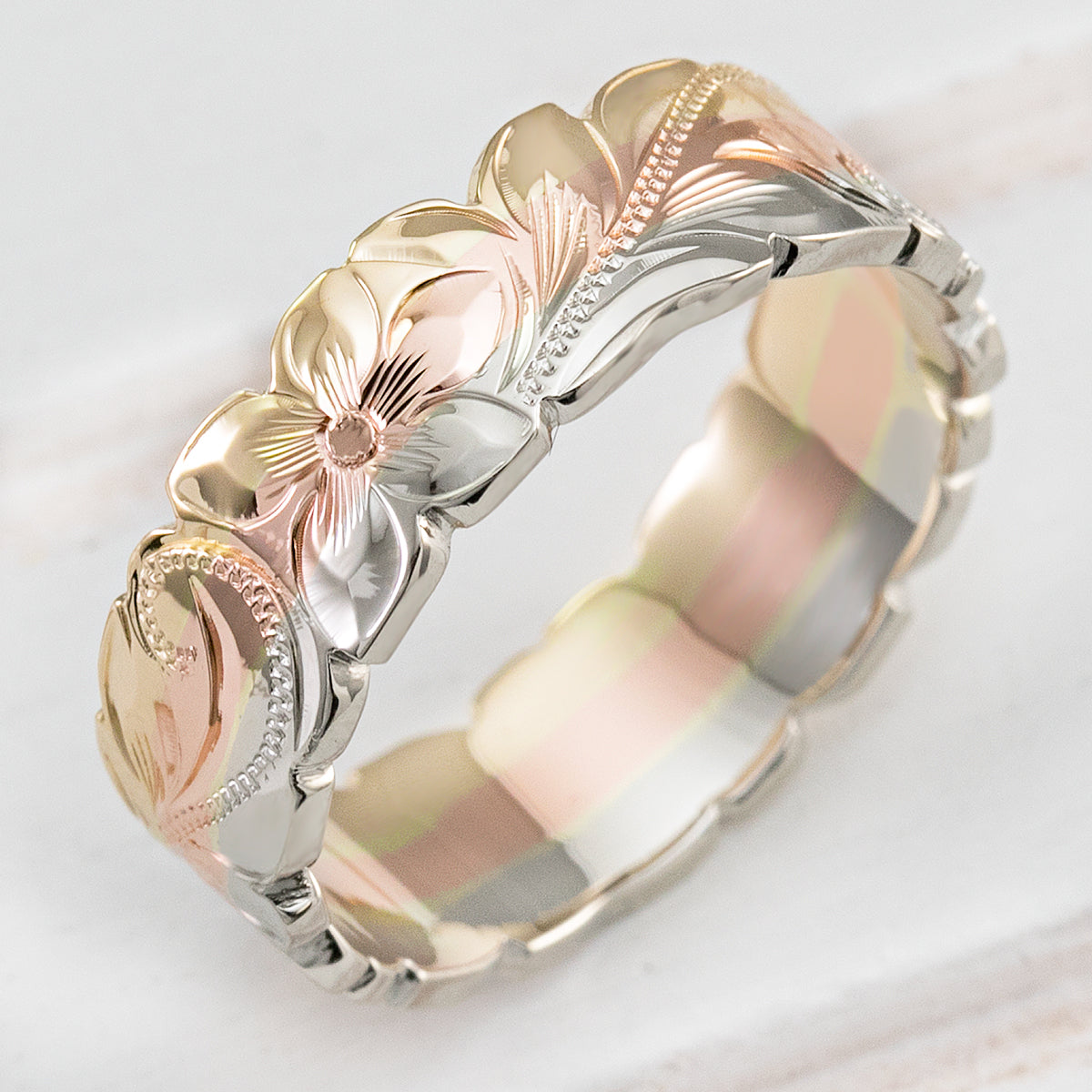
You can explore the history of Hawaiian heirloom jewelry to see how this broader tradition of using culturally significant materials in personal adornment evolved across generations.


Why koa wood symbolizes strength and prestige today
The linguistic and historical meanings reinforce each other. A wood named "brave, bold, fearless" that was shaped into the vessels Hawaiians used to navigate the Pacific carries an earned reputation for strength and prestige. It's not marketing language. It's etymology and history converging.
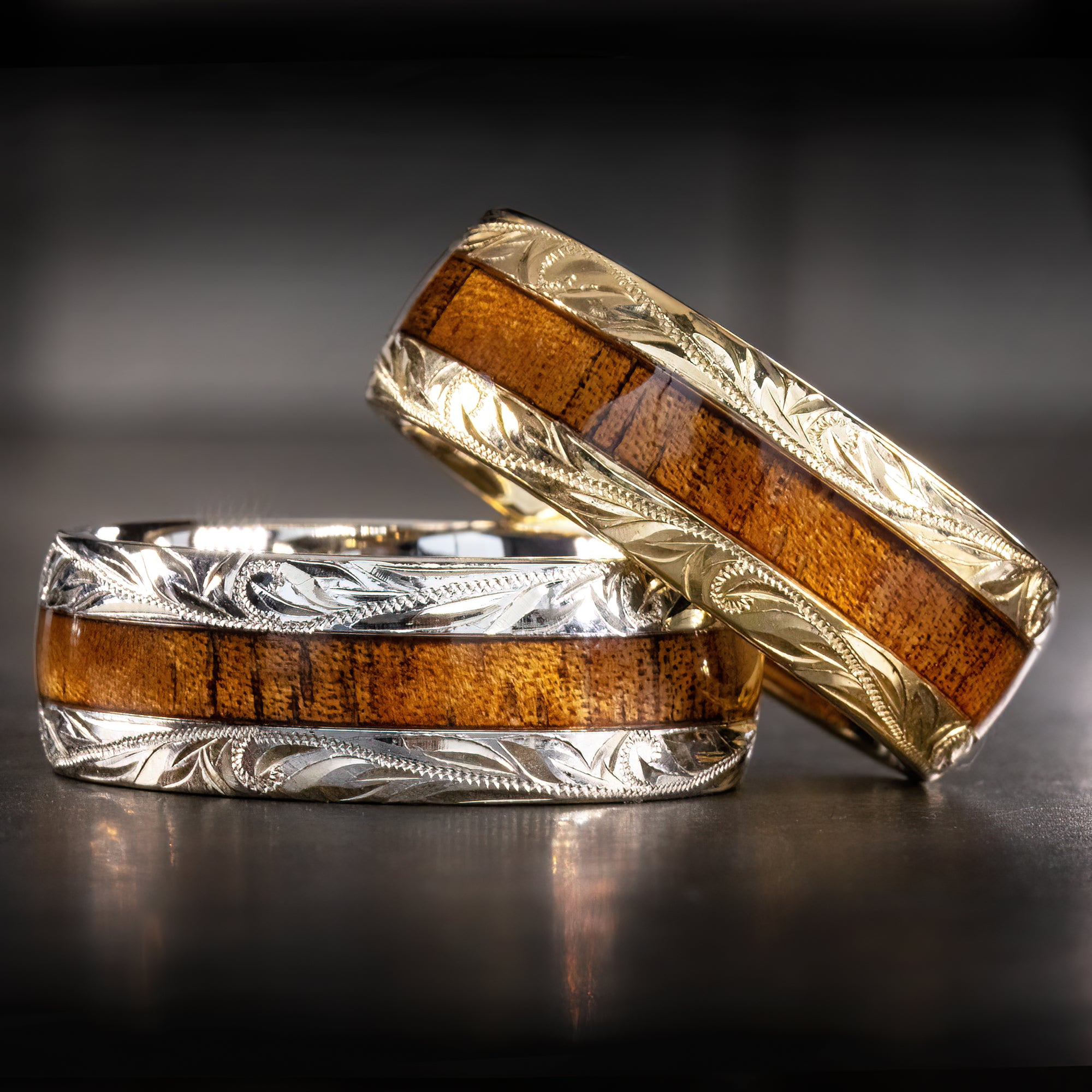
For couples choosing a koa wood wedding band, many connect the symbolism to something personal: the courage it takes to commit to a life with another person, and the strength required to sustain that commitment. That's not a traditional Hawaiian code or an ancient custom specifically tied to marriage; it's a meaningful interpretation that resonates with modern buyers because the core values align. Bravery, partnership, endurance. The material carries those associations honestly.
Modern significance and what to ask about sourcing
Koa is a native Hawaiian species, and its forests have faced significant pressures from development, invasive species, and historical land use. Because of this, koa is considered scarce and is subject to legal protections and harvesting regulations in Hawaii. Responsibly sourced koa comes from legal harvests, often salvaged timber (fallen or dead trees) or managed private lands.
When choosing koa wood jewelry, it's worth asking the jeweler a few straightforward questions:
-
Where does your koa come from?
-
Is it legally harvested or salvaged timber?
-
Is your studio located in Hawaii?
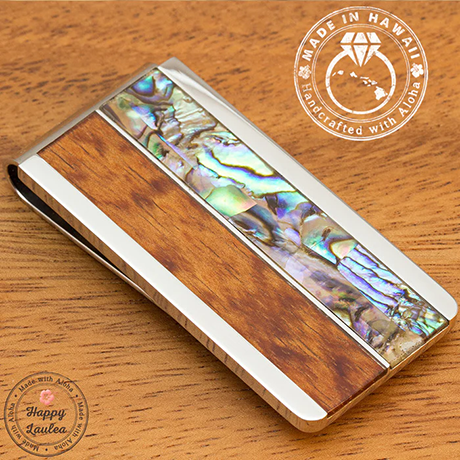
A Hawaii-based studio with transparent sourcing practices is a meaningful signal. At Happy Laulea, pieces are handcrafted in our Hawaii studio, which you can tour by appointment, and our koa is genuine Hawaiian koa wood. You can read more about the material itself on our Hawaiian koa wood guide.

How to care for koa wood rings and jewelry
Koa's beauty is also its vulnerability: it's a natural wood, and without proper care, it can be damaged by moisture, chemicals, and physical wear. These tips apply whether you have an inlay ring, a solid koa piece, or a pendant.
Keep it dry. Remove your ring before swimming, showering, washing dishes, or any water-related activity. Prolonged moisture exposure can cause the wood to swell, warp, or loosen from its setting.
Avoid harsh chemicals. Cleaning products, hand sanitizers, perfumes, and lotions can degrade wood finishes and damage metal components. Put your ring on after applying these products, not before.
Clean gently. If the ring needs cleaning, use a soft, slightly damp cloth. Wipe gently and let it air dry completely. Avoid submerging it or scrubbing.
Store it safely. Keep koa jewelry in a dry place, away from direct sunlight and humidity fluctuations. A fabric-lined jewelry box works well. Avoid storing it in a bathroom where steam is regular.
Dry it immediately if exposed. If your ring gets wet unexpectedly, dry it promptly with a soft cloth and let it finish air drying before storing.
These guidelines are consistent with care advice published by established Hawaiian jewelers, including Na Hoku's guidance to avoid moisture and harsh chemicals and to clean with a soft damp cloth (Na Hoku, "How to Care for Koa Inlay Jewelry," March 2026). The key principle is straightforward: wood responds to its environment, so give it a stable, dry one.
If you're looking for a piece that carries all of this meaning in a form you'll wear every day, browse our koa wood rings collection or explore our Hawaiian heirloom rings for designs that pair koa with gold, silver, and titanium.