Real Gold & Gemstones in Hawaiian Jewelry: What to Know


If you've ever fallen in love with a Hawaiian jewelry piece online and then wondered, "But is that actually real gold?", you're not alone. It's one of the most common questions we hear. The short answer is yes, many Hawaiian jewelry brands do use real precious metals and genuine gemstones. But "real" can mean a lot of different things depending on how a product is labeled, and not every listing makes that easy to decode.
Here's a plain-language guide to help you shop confidently, understand what hallmarks actually mean, and know exactly what to ask before you buy.
Many brands use real materials, but the label matters
Plenty of Hawaiian jewelry brands work with solid 14K or 18K gold, natural diamonds, and genuine gemstones. That's genuinely good news. The confusion tends to come from listings that use phrases like "gold" or "Hawaiian-inspired" without specifying whether the metal is solid, plated, or filled, or whether a stone is natural, lab-created, or a simulant.
Under the FTC's Jewelry Guides (16 CFR Part 23), U.S. sellers are required to use clear disclosure language when describing precious metal content and gemstone origin. A product shouldn't be described in a way that implies solid gold if it's actually gold-plated. Similarly, the FTC's consumer guidance on buying gemstones, diamonds, and pearls makes clear that lab-created and imitation gems must be labeled as such, buyers shouldn't have to guess.
When a listing doesn't include that detail upfront, it doesn't necessarily mean the materials are fake. It may just mean the seller hasn't provided enough information. That's your cue to ask.

Gold: what karats mean, how to read hallmarks, and why "gold-colored" isn't enough
Karats and what they tell you
Gold jewelry is sold in different purities, most commonly 10K, 14K, and 18K. The karat tells you how much of the piece is actually gold versus other metals in the alloy. Here's a quick breakdown:
-
10K = 41.7% pure gold
-
14K = 58.5% pure gold (the most common for Hawaiian heirloom jewelry)
-
18K = 75% pure gold
Most solid Hawaiian heirloom pendants are made in 14K gold, stamped "14K" or "585" (since 58.5% = the numeric hallmark 585). If you see "750" stamped on a piece, that indicates 18K gold (75.0% purity). These numeric stamps follow an international standard and are a reliable first indicator of metal purity. For a deeper look at how karats compare day-to-day, the white gold vs yellow gold comparison guide covers how purity affects color, durability, and price across gold types.
Solid gold vs gold-plated vs gold-filled
These three are not the same thing, and the price difference between them can be significant.
-
Solid gold means the entire piece is made from a gold alloy (10K, 14K, or 18K) through and through. It won't wear through over time the way plated pieces can.
-
Gold-plated means a thin layer of gold has been applied over a base metal (usually brass or silver). It looks gold but can wear off. The FTC Jewelry Guides require that plating be clearly disclosed, it can't just be implied by a karat number.
-
Gold-filled falls in between: a thicker layer of gold bonded under heat and pressure to a base metal core. More durable than plated, but still not solid gold.
A listing that says "14K gold" without specifying "solid" is worth a closer look. For a detailed breakdown of the differences between plated and filled jewelry, gold plated vs gold filled walks through how to tell them apart and what each means for longevity.
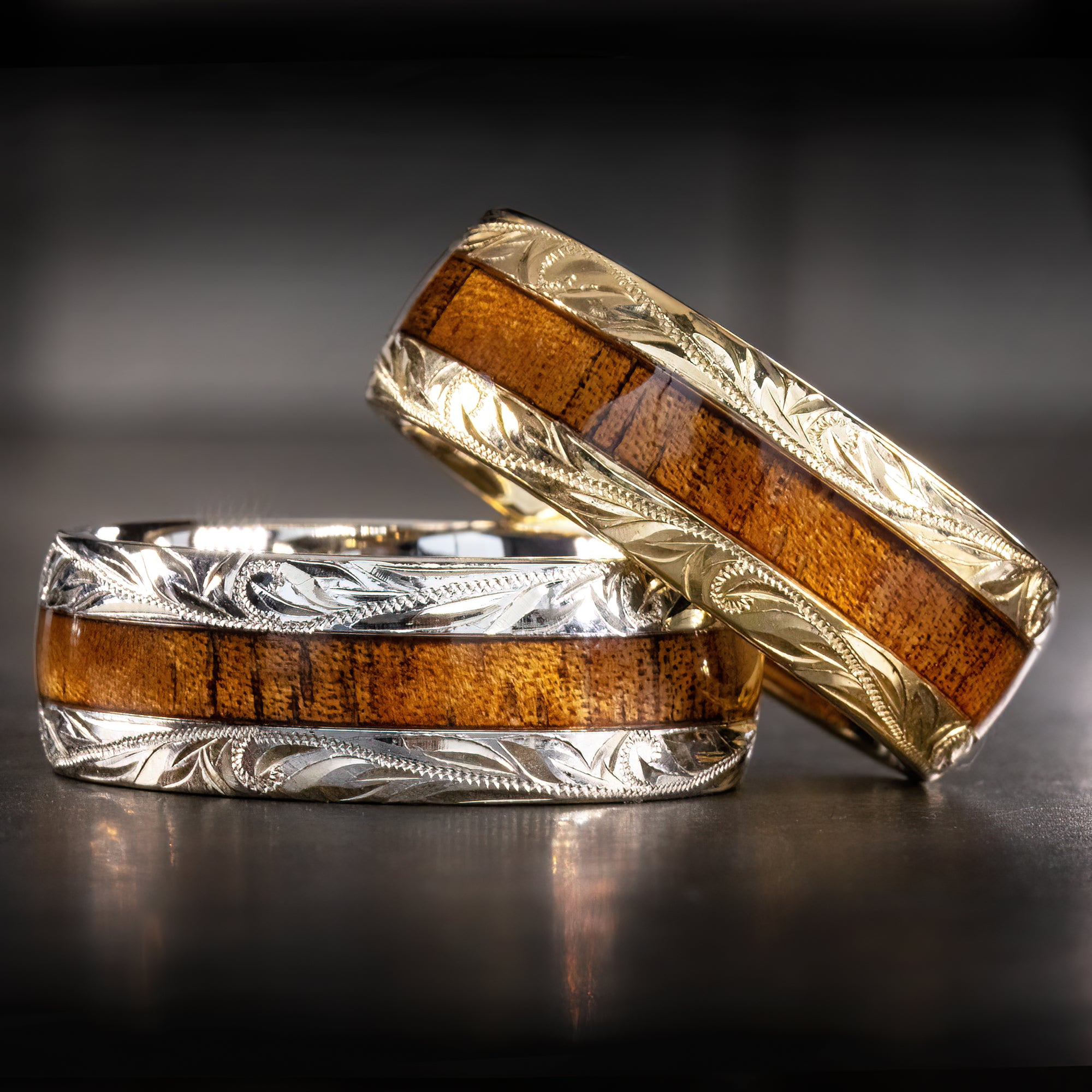
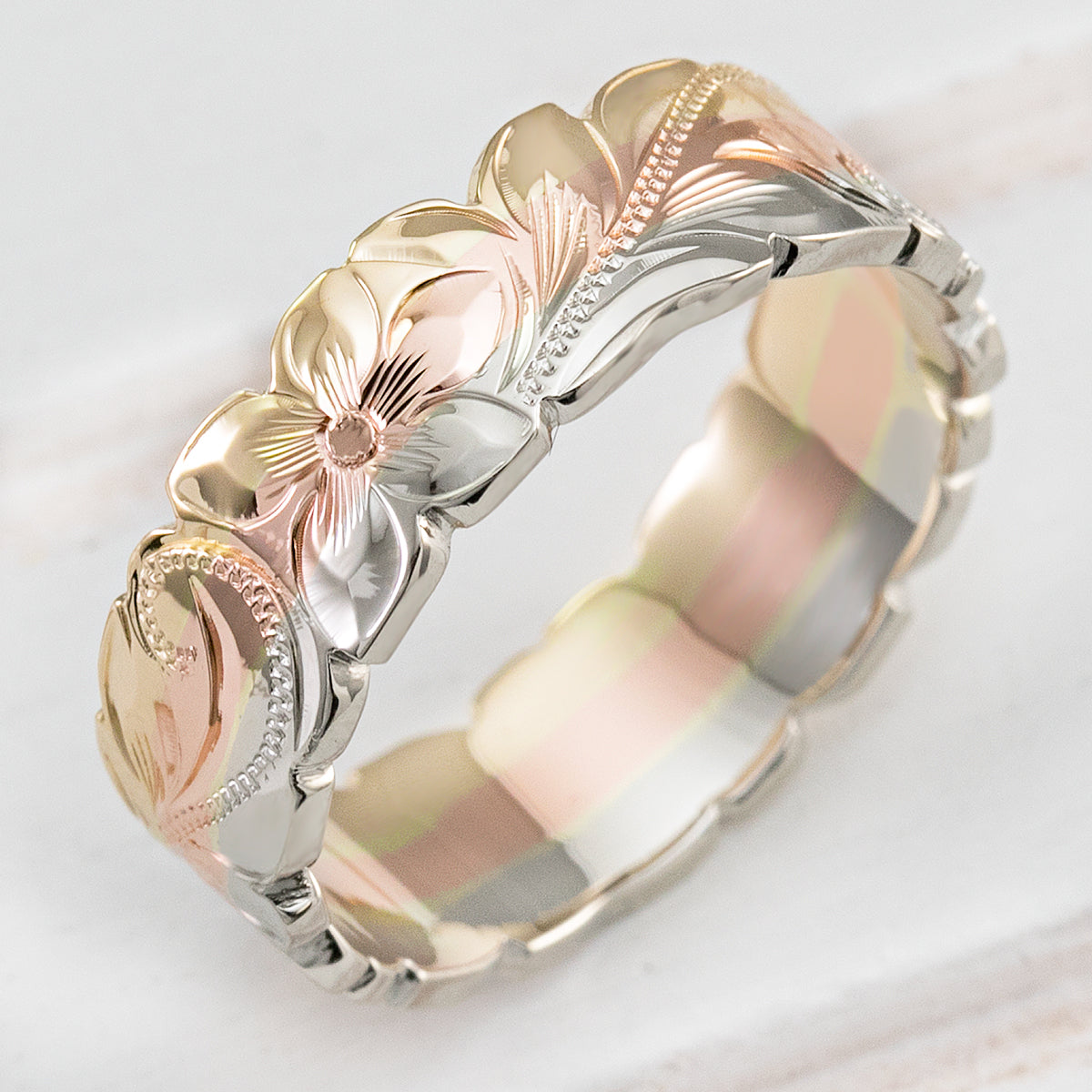
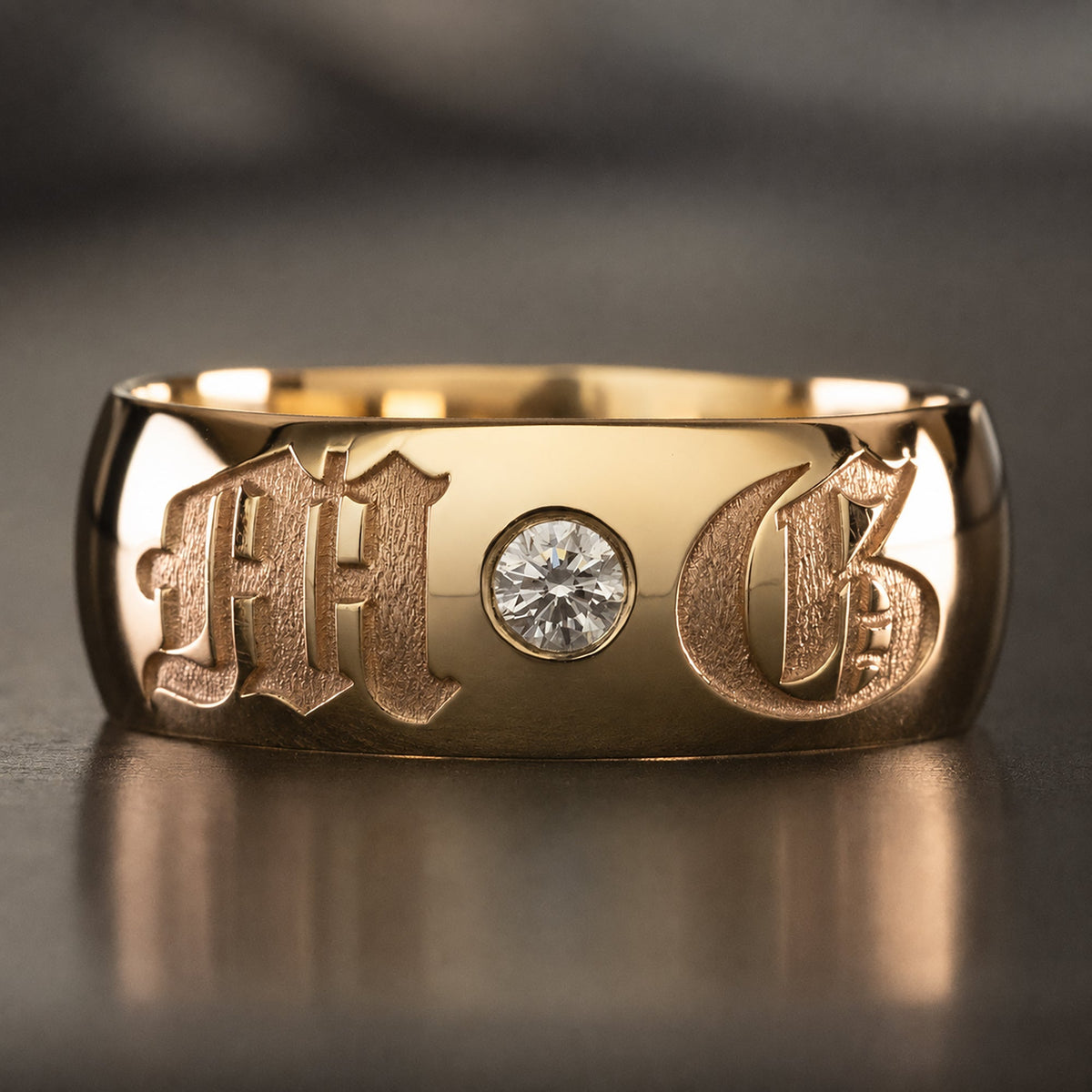
At Happy Laulea, our gold pieces are crafted from solid gold, no plating, and that's stated clearly in each product listing so you never have to wonder.

Gemstones and inlays: natural, lab-created, and imitation are three different things
Diamonds
When a listing mentions diamonds, there are three categories to distinguish:
-
Natural diamonds formed in the earth over billions of years. They command the highest prices and should come with documentation (ideally an independent grading report from a lab like GIA or AGS).
-
Lab-grown diamonds are chemically and physically identical to natural diamonds but created in a controlled environment. They're real diamonds, just not mined. The FTC requires sellers to disclose when a diamond is lab-grown, not just call it a "diamond."
-
Diamond simulants (cubic zirconia, moissanite, white sapphire) look similar but are entirely different materials. A CZ is not a diamond. A seller using the word "diamond" for a simulant without clear qualification violates FTC guidance.
The FTC's 2019 guidance page "In the Loupe: Advertising Diamond, Gemstones and Pearls" emphasizes that simulants must be disclosed accurately and can't simply be marketed as diamonds without qualification. Always ask which category applies to the stones in a piece you're considering.
Hawaiian-specific inlays: opal, abalone, black jade, and Koa wood
These materials are part of what makes Hawaiian jewelry so distinctive. But each has natural and imitation versions.
-
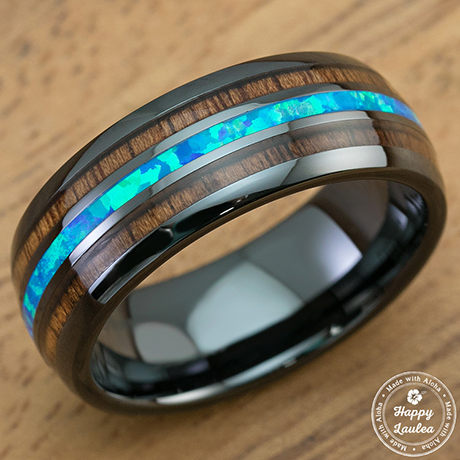
Opal can be natural, synthetic (lab-created with the same mineral composition), or simulated (glass or resin that just looks opal-like). Natural opal is the most valuable; a doublet or triplet is a composite of thin natural opal layered over a backing, common but worth knowing about. Browse the opal inlay ring collection for examples with material details clearly listed.
-
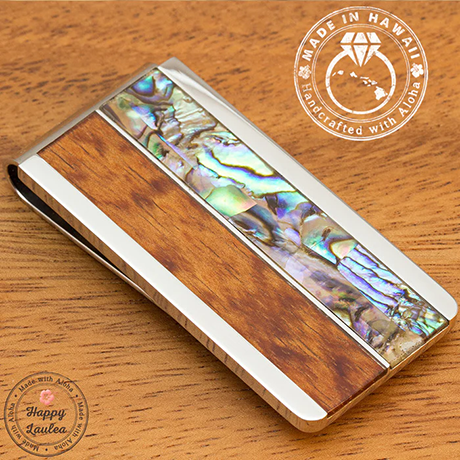
Abalone shell is the iridescent lining of real sea snails. Imitation abalone is a resin or plastic material designed to mimic the look. Ask the seller specifically: "Is this natural abalone shell or a synthetic/resin substitute?" The abalone shell inlay rings collection shows what genuine abalone inlay looks like in finished pieces.
-
Black jade (often nephrite or treated material) has both natural and imitation versions on the market. Dyed or treated material should always be disclosed.
-
Koa wood is a native Hawaiian hardwood. Rings featuring Koa wood inlays use actual wood, but the authenticity question centers on whether it's genuine Hawaiian Koa or a substitute wood sold under a similar name.
A quick checklist for any inlay material:
-
Is it natural, treated, or synthetic/man-made?
-
Is it a solid piece or a composite (doublet/triplet/laminate)?
-
Does the product listing or seller confirm this in writing?

How to verify authenticity before you buy
Step 1: Look for hallmarks
Check the inside of a ring band or the clasp/back of a pendant for a purity stamp. A jeweler's loupe makes this easier; a clear close-up photo can also help if you're buying online. "585" means 14K. "750" means 18K. "417" means 10K. No stamp doesn't automatically mean fake, but it's a flag worth raising with the seller.
Step 2: Ask for documentation on stones
For natural diamonds, request an independent grading certificate (GIA, AGS, or equivalent). For lab-grown diamonds, sellers should still be able to confirm origin and basic grading information. A store receipt alone isn't independent documentation, it just confirms you paid for something, not what that something actually is.
Step 3: Get a professional appraisal for major purchases
For insurance purposes, estate pieces, or any purchase where authenticity significantly affects value, a certified gemologist appraiser (look for GIA Graduate Gemologist credentials or an ASA/AAA-certified appraiser) can test materials objectively. Stamps are helpful, but stone testing and metal assay are the gold standard, literally.
Example disclosure labels and questions to ask sellers
Good material disclosure language looks like this:
-
"Solid 14K yellow gold (stamped 585)"
-
"18K white gold (stamped 750)"
-
"14K gold-plated over sterling silver base"
-
"Round full-cut VS G-H natural diamond"
-
"Round full-cut VS F+ lab-grown diamond"
-
"Natural Australian opal inlay (solid, not composite)"
-
"Synthetic opal inlay"
-
"Natural abalone shell inlay"
-
"Resin/imitation abalone shell inlay"
If a listing doesn't include this level of detail, copy and paste these questions to the seller before purchasing:
-
Is the gold solid, plated, or gold-filled? What karat, and what hallmark stamp does the piece carry?
-
Are the diamonds natural, lab-grown, or simulants (such as CZ or moissanite)?
-
Is there an independent grading certificate for the diamonds?
-
Is the opal/abalone/black jade/Koa wood natural, treated, or synthetic? Is it solid material or a composite (doublet/triplet)?
A seller who can't answer these questions clearly, or who avoids answering them, is giving you useful information too.
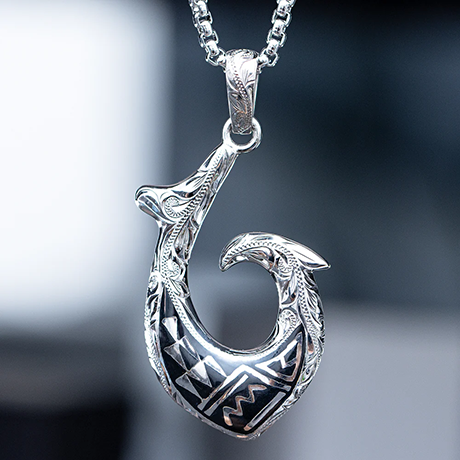
At Happy Laulea, transparency about materials is built into how we describe every piece. Our studio is in Honolulu, our gold is solid (never plated), and we clearly label whether diamonds are natural or lab-grown in each listing. If you ever have a question a product page doesn't answer, our team is available to respond directly. For more background on how to evaluate Hawaiian heirloom jewelry options, the solid gold Hawaiian heirloom pendants buyer's guide covers what to look for across brands, including how to read hallmarks in context. Buying meaningful jewelry shouldn't require guesswork, you deserve to know exactly what you're getting.