

Article: How to Wear Your Engagement Ring and Wedding Band

How to Wear Your Engagement Ring and Wedding Band
Two rings, one finger, and somehow this trips people up constantly. Which one goes on first? Does the order actually mean anything? What do you do with the engagement ring during the ceremony itself, just leave it on?
Quick answer: most people wear the wedding band closest to the hand and the engagement ring stacked on top of it, both on the left ring finger. That's tradition, not law. Plenty of people do it the other way around, wear them on separate hands, or skip the pairing entirely. Here's how each option actually works, plus what happens on the day itself.
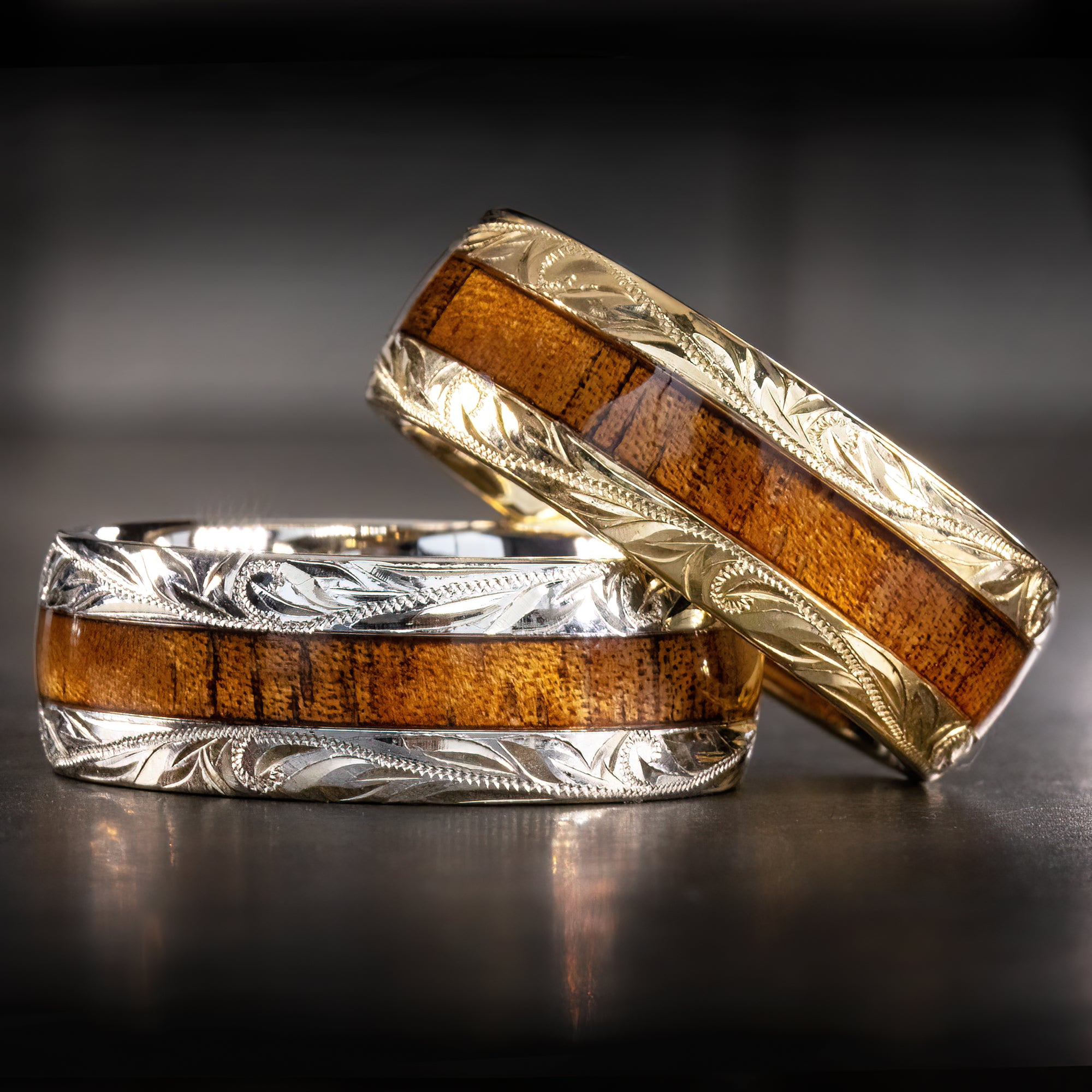
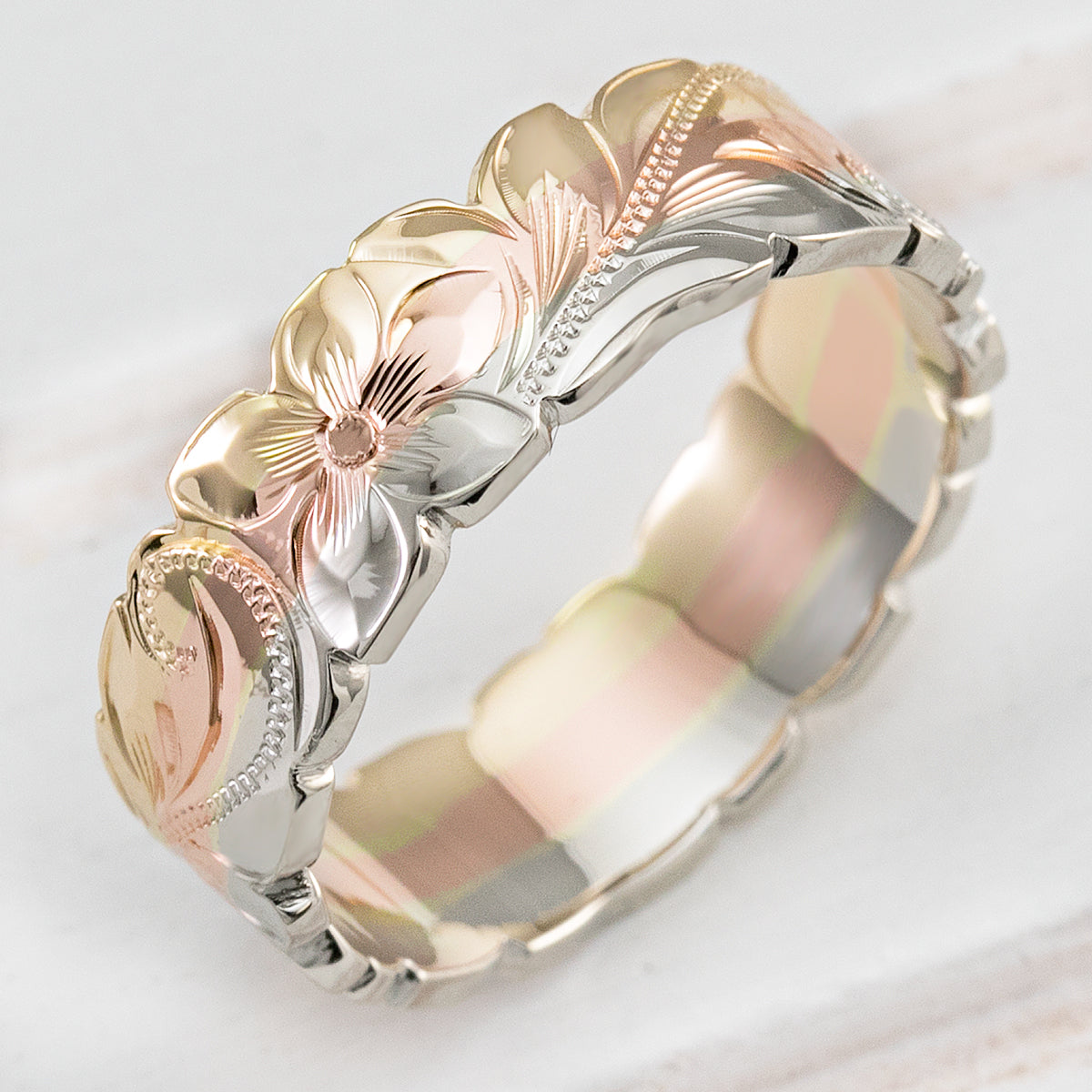
Shop Happy Laulea's collection of engagement rings and wedding bands.
Quick Answer: Which Ring Goes On First?
Traditionally, the wedding band goes on first, closer to your heart, with the engagement ring stacked on top. During the ceremony, the engagement ring usually moves to the right hand so your partner can slide the wedding band onto the bare left ring finger, then it comes back afterward, stacked over the band.
That's the default. It's not a rule anyone enforces, and a lot of couples do their own version of it. If you want the short version and nothing else, that's it. Everything below is the "why" and the alternatives.

What Finger Do Both Rings Go On?
In the US and most Western countries, both rings go on the fourth finger of the left hand, the one people just call the ring finger. The reason traces back to a Roman belief in the vena amoris, supposedly a vein running straight from that finger to the heart. It's a nice story. It's also wrong, every finger has a vein that eventually connects to the heart, but the tradition outlived the anatomy lesson.
Not every culture agrees on the left hand, either. Germany, Russia, and Greece commonly use the right hand instead. In some Jewish ceremonies, the ring goes on the right index finger first and moves later. In parts of India, the left hand is considered the one to avoid entirely, so rings go on the right instead. None of these are wrong, they're just different starting points, and they've each been stable for longer than the vein theory has been debunked.
Three Ways to Wear Your Engagement Ring and Wedding Band
Traditional: Wedding Band First
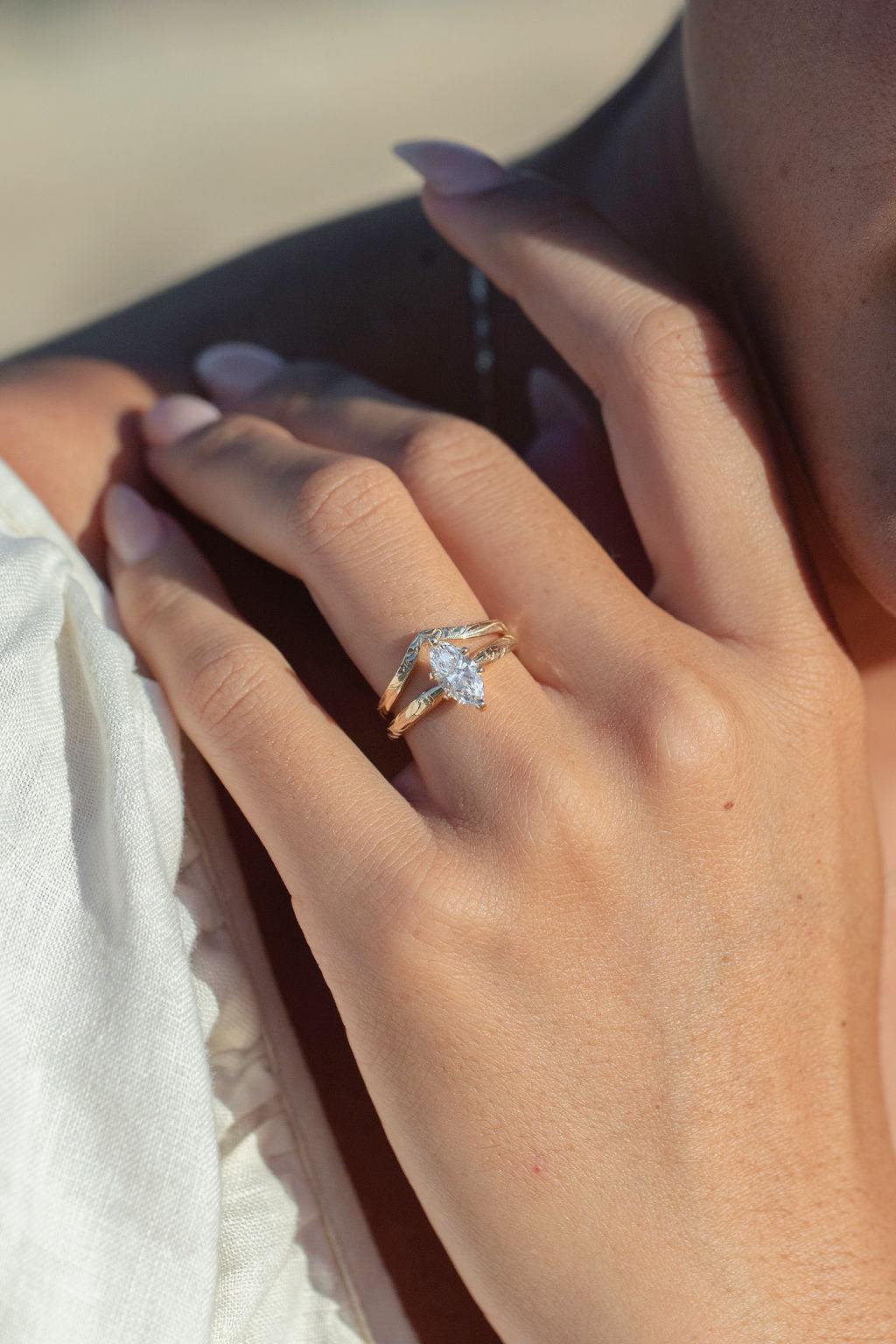
The wedding band sits closest to the hand, and the engagement ring stacks on top of it. The logic, at least the sentimental version of it, is that your marriage vows sit closest to your heart, with the engagement ring representing the promise that came before it, layered on top.
This is the most common setup in the US, and it's the one most jewelers will assume you mean if you don't specify otherwise.
Chronological: Engagement Ring First
Some people flip it: engagement ring on first, wedding band stacked over it. The reasoning here is more practical than symbolic, it puts the rings on in the order you actually received them. It's also a genuinely useful option if your engagement ring has a low-profile setting that sits more comfortably against the skin, with a slightly larger wedding band framing it from outside.
Neither order is more "correct." One follows a sentiment about what sits closest to the heart, the other follows the literal timeline of the relationship. Pick whichever means more to you, and don't let anyone tell you there's a version you're required to prefer.
There's also a practical angle worth mentioning: ring shape matters more than people expect. A curved or contoured wedding band is often designed to hug a specific engagement ring setting, which usually means it needs to sit adjacent to (not underneath) the engagement ring to actually match up the way it was designed to. If your bands were bought as a matched set, check with the jeweler about which order the design assumes before you settle on one.
Modern: Different Hands, Fingers, or a Necklace
Plenty of people skip the stack altogether. Engagement ring on the right hand, wedding band on the left. Both rings on the same hand but different fingers. One ring worn daily, the other saved for occasions that call for it. Some people who work with their hands a lot, in the kitchen, at a job site, in a lab, wear the wedding band alone and keep the engagement ring on a necklace or in a box for evenings out.
None of this is a departure from anything sacred. It's a departure from a 15th-century Roman guess about anatomy. Do what actually works for your hands and your life.

What to Do With Your Rings During the Ceremony
This is the part people actually search for and rarely find a straight answer to. Here's the mechanical version: before you walk down the aisle, move your engagement ring to your right hand. That leaves your left ring finger completely bare, so your partner can place the wedding band directly onto it during the vows, no ring already sitting there in the way.
After the ceremony, move the engagement ring back to the left hand and stack it over the wedding band. Some people do this within minutes, right after the recessional. Others wait until the reception, or honestly, until they remember to do it later that night. There's no deadline. Alternatively, some couples just have the officiant slide the wedding band on top during the ceremony itself and sort out the "correct" order afterward, which skips the right-hand shuffle entirely and is honestly easier if you're worried about losing track of a ring mid-ceremony.
Do You Have to Wear Both Rings?
No. This gets asked more than you'd expect, and the answer is genuinely no, there's no obligation attached to either ring once the wedding is over.
Some people wear only the wedding band day to day and save the engagement ring for occasions where it makes sense to have it on, dinners out, events, anything that isn't manual labor or a gym session. Others do the opposite, or wear neither most days and both when it counts. If your work involves your hands constantly, cooking, healthcare, physical trades, wearing a smaller or no ring on the job and putting the full set on afterward is common enough that nobody will think twice about it.
None of this says anything about how committed you are. A ring left in a dish by the sink during a workday isn't a statement about the relationship, it's just common sense if the alternative is scratching a diamond against a mixing bowl or catching a prong on a piece of equipment. The commitment doesn't live in the metal.

Adding an Eternity or Anniversary Band to the Stack
If you're adding a third ring later, an eternity band, an anniversary band, a ring picked up on a big trip, there's no strict rule for where it goes either. The most common approach is to slot it in wherever it sits comfortably against the other two, usually either on the outside of the stack or between the wedding band and the engagement ring if the width and shape allow it.
A few things actually matter here, though. If the new band is significantly wider than your existing rings, putting it on the outside usually looks and sits better than trying to wedge it into the middle. And if you're planning to wear three rings together long-term, it's worth having a jeweler check the fit before you commit, since a stack that looked fine on paper can end up rubbing or catching on itself once you're actually wearing it every day.
Keeping Stacked Rings Comfortable and Undamaged
A few practical things that matter more once you're wearing two or three rings stacked together instead of one:
Get them properly sized, and get them checked again if your finger size changes with the seasons or over the years, because a snug fit that felt fine in June can feel tight in January. Clean them regularly with mild soap and warm water and a soft brush, and skip the harsh chemicals, they can dull metal and loosen stone settings faster than daily wear ever will. Take the rings off before swimming, heavy cleaning, or anything that involves cold water, since fingers shrink in the cold and that's exactly when a ring is most likely to slip off without you noticing. And if you want the rings to stay perfectly aligned without you having to think about it, ask a jeweler about soldering them together, it's a permanent fix that keeps the stack from twisting, though a good jeweler can also undo it later if your rings or your preferences change.
Frequently Asked Questions
What is the 2:1:1 rule in jewelry?
There isn't one widely agreed-upon definition, and jewelers use the term inconsistently, so treat any specific numeric "rule" you see online with some skepticism. If you've seen this referenced somewhere specific, the safest move is asking a jeweler directly what they mean by it rather than assuming it's a universal standard, because it isn't one.
Do you wear a wedding band under an engagement ring?
Yes, in the traditional US setup, the wedding band sits closest to the hand and the engagement ring goes on top of it. That said, plenty of people wear it the other way around, and neither order is more correct than the other.
Which ring goes on first, wedding or engagement?
Traditionally the wedding band goes on first, during the ceremony itself. Chronologically, though, most people receive the engagement ring first, months or years before the wedding day. Both facts are true at once, they're just answering slightly different questions.
Do you wear your engagement ring on your wedding day?
Usually, yes, just not on the left ring finger during the actual ceremony. Most people move it to the right hand beforehand so the wedding band has a clear finger to go onto, then move it back afterward.
Can you solder your rings together?
Yes. A jeweler can fuse your wedding band and engagement ring into one piece so they stay perfectly aligned and stop shifting or twisting against each other. It's meant to be permanent, but it's not irreversible, a jeweler can separate soldered rings later if you need them to.
Which Way Is Right for You?
There isn't a version of this that's wrong, as long as it's actually yours. If tradition means something to you, wear the band first and the ring on top, and let the small ceremony-day shuffle happen the way it's happened for generations. If it doesn't, wear them on separate hands, skip one entirely on weekdays, or solder the whole thing into one piece and stop thinking about it. The rings are supposed to represent your relationship, not the other way around.