
Best Matching Couples Wedding Ring Sets

Picking wedding rings together is one of the sweetest parts of planning a life together, and it's also where a lot of couples get stuck. Do you both need the exact same matching ring? Should his be wider? What happens if one of you works with your hands all day and the other wants something delicate?
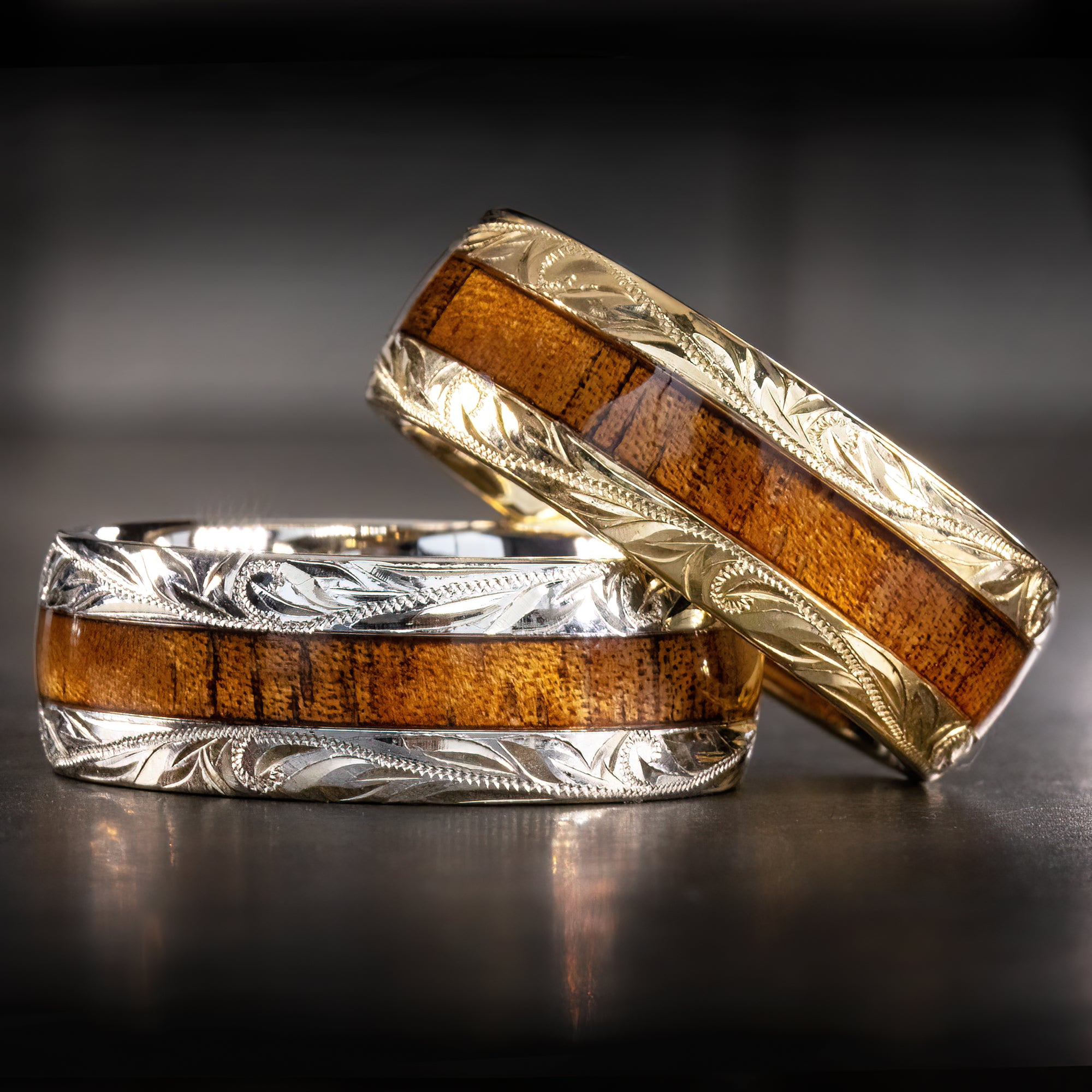
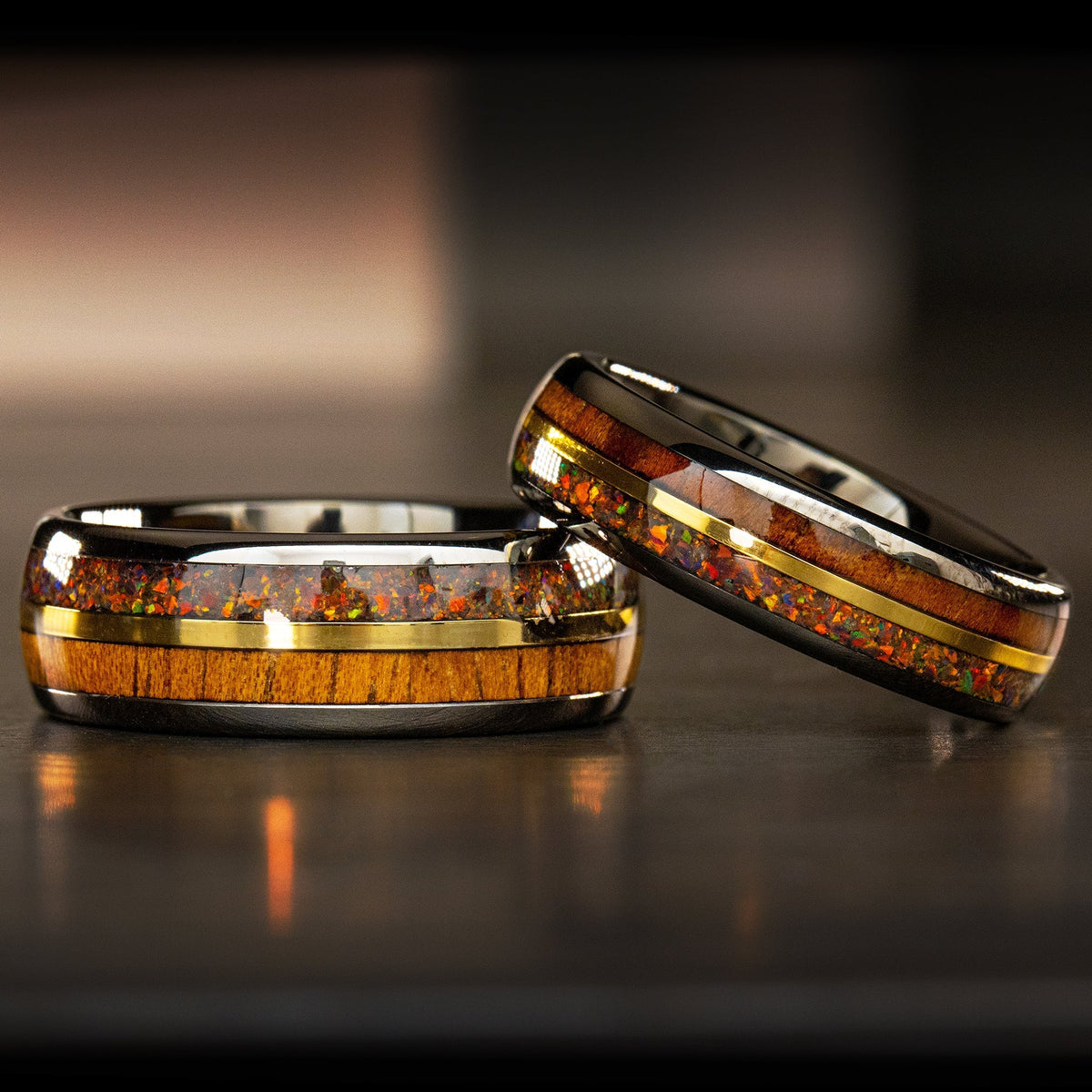
The good news: there's no single right answer, just the right answer for you two. "Matching" simply means your rings share a clear visual thread, whether that's identical metal and inlay or a shared motif in two different widths. "Complementary" means the rings tell the same story with different details, like a wave-edge pattern on both bands but a bolder Koa wood inlay on his and a delicate opal accent on hers.
Before you shop, run through a short checklist together: How rough is your daily life on your hands? Does either of you have sensitive skin? What's your budget range? And how much lead time do you have before the big day? This guide walks through durable materials, Hawaiian-inspired inlays, width pairing strategy, sizing, and budget tiers, so you can land on matching couples wedding ring sets that actually fit how you live.

How titanium, tungsten, ceramic, gold, and platinum really compare
Every metal trades off differently between durability, comfort, and how much upkeep it wants from you. Here's the honest breakdown.
Titanium is the lightweight workhorse. It's valued for its strength-to-weight ratio, offering remarkable durability without heavy weight. Titanium rings are also hypoallergenic and nickel-free, which makes them a smart pick for anyone with sensitive skin or a known metal allergy. The tradeoff: titanium is hard enough that most jewelers, including most retailers offering titanium rings, note it generally can't be resized once it's made. Order carefully. Happy Laulea's titanium ring collection includes Koa wood and opal inlay options built specifically around accurate sizing from the start.
Tungsten carbide is the densest, most scratch-resistant option on this list, and it has real heft on the finger, which some people love and others find heavy for daily wear. Tungsten is extremely hard and scratch-proof, but brittle, meaning it can crack if dropped, while platinum is softer and scratches more easily but bends rather than breaking. Tungsten also isn't resizable, so sizing has to be right on the first try.
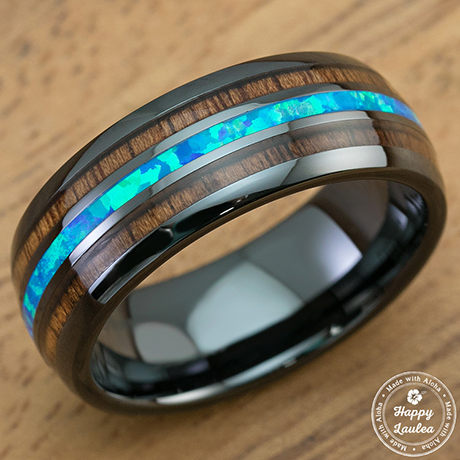
Ceramic (including the hi-tech black ceramic Happy Laulea works with) is scratch-resistant and won't tarnish, but it shares tungsten's brittleness. Ceramic rings are scratch-resistant, but they can break, and a significant impact or force can cause the material to chip or shatter. It's a great look for someone who wants a low-maintenance, modern finish and isn't worried about job-site impacts.
Gold remains the classic choice, and karat matters more than most buyers realize. 14K gold is more scratch resistant than 18K, because it's alloyed with more hardening metals. 10K is even more durable but has a slightly less rich color. Gold can be resized, replated, and repaired for decades, which is part of why it stays popular for gold rings and wedding bands.
Platinum is the premium traditionalist's pick. It's naturally white (no replating needed), develops a soft patina over years of wear that many people love, and can be polished back to a mirror finish anytime. It's also one of the densest precious metals, so it feels substantial without being as hard, or as brittle, as tungsten or ceramic.
If you want a quick gut check: active hands and tight budgets tend to do best with titanium or tungsten, sensitive skin points toward titanium or platinum, low-maintenance lifestyles favor ceramic or tungsten, and anyone who anticipates resizing (weight changes, hand-me-down heirlooms) should lean gold or platinum.


Koa wood, opal, and abalone: symbolism and how to care for them
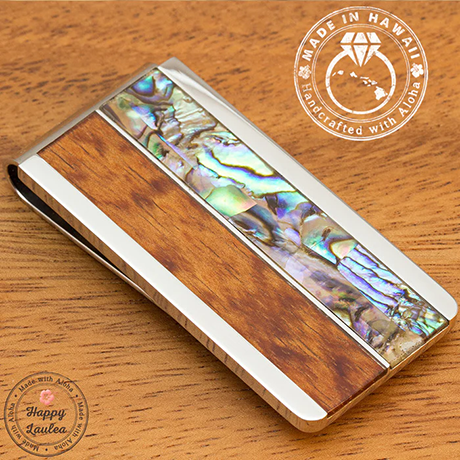
Hawaiian-inspired inlays are where a ring stops being just a band and starts being a story. Koa wood has long been associated with strength and Hawaiian heritage. It's often used for canoes and heirloom pieces, and that same sense of durability and legacy carries into Koa wood wedding rings. Opal brings shifting color and a soft internal glow that many couples read as a symbol of hope and change within the relationship. Abalone shell, pulled from ocean waters, carries a natural connection to the sea, healing, and the ebb and flow of a long partnership.
Care matters here more than with plain metal. Happy Laulea's own ring care guidance is direct on this point: avoid any cleaning solvents on Koa or abalone inlay rings, sticking to standard soap instead, because solvents can eat away at the resin and the wood underneath. The same logic applies to opal: skip harsh chemicals and abrasive polishing cloths, and just use mild soap and a soft cloth. Abalone shell can also dull or fade with prolonged direct sunlight exposure, so it's worth taking rings off before long beach days or sunbathing.
When you're deciding how to "match" inlays as a couple, you've got two solid paths. One is choosing the same stone family for both rings (both Koa, or both abalone) so the sets read as a true pair. The other is a focal-statement approach: one partner's ring carries the bold inlay, like a wide abalone-and-Koa tri-inlay, while the other's ring uses a slimmer version of the same material as a quieter echo. Both read as intentional pairs; it's really about how much visual weight each of you wants on your hand every day.

Width pairing and matching vs. complementary style
A classic width pairing puts him in an 8mm to 10mm band and her in a 4mm to 6mm band, roughly proportional to hand size, while keeping the same finish, edge detail, and inlay placement across both. That proportional gap is actually what makes two different-sized rings look like a matched set rather than two random rings.
That said, width matters less than shared design language. Two rings in the same wave-edge profile, with the same polish (brushed versus high-shine) and the same inlay placement, will look like a set even if one is 4mm and the other is 10mm. This is where complementary pairing shines: same motif family, same edge treatment, but maybe his ring carries a heavier Koa wood inlay while hers uses a delicate offset opal accent in the same wood tone. Comfort fit (a rounded interior edge) is worth prioritizing on both rings regardless of width, since it's the difference between a ring you barely notice and one you're constantly adjusting.

Getting sizing and engraving right the first time
Measure your ring size at the end of the day when fingers are at their largest, and avoid sizing right after exercise, in cold weather, or first thing in the morning, since finger size shifts throughout the day. This matters even more with materials that can't be resized. Titanium and tungsten rings are generally not resizable once finished, so double-check sizing before ordering. Gold and platinum can typically be resized by a jeweler later, giving you more room for error.
For engraving, Hawaiian motifs like maile vine and plumeria pair beautifully with names, initials, or a wedding date tucked on the inside of the band. Happy Laulea's custom name jewelry collection shows how personalization can extend beyond the ring itself. If you're local to Hawaii or planning a trip, you can also book a studio visit to see materials and engraving samples in person before you commit, which is worth building into your timeline if your ceremony date is more than a few months out.

Budget tiers: pairing ideas for every price point
Best budget: Sterling silver or tungsten carbide bands with a single Koa wood inlay keep costs down while still looking intentional. Try a slim silver Koa wood inlay ring for her paired with a wider tungsten carbide Koa wood band for him.
Best durability value: Tungsten or titanium with a Koa and turquoise or opal offset inlay gives you scratch resistance plus color. A tungsten carbide ring with Koa wood and turquoise pairs nicely with a titanium Koa and opal offset ring.
Best everyday luxury: Black ceramic with layered inlays feels rich without precious-metal pricing. The hi-tech black ceramic ring with abalone, Koa, and opal is a strong statement piece that works well sized down for her.
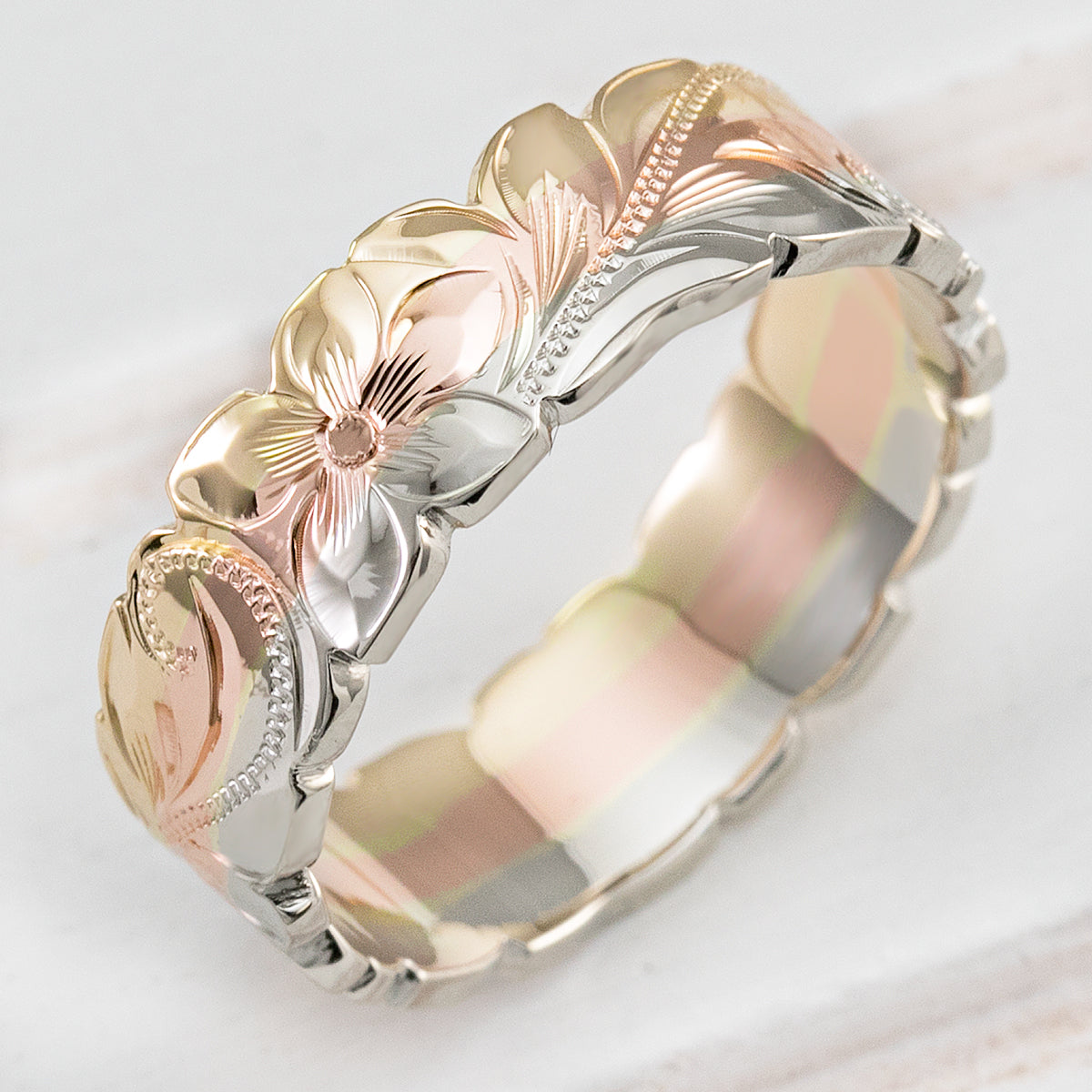
Best premium statement: Solid gold with abalone shell inlay, hand-engraved with wave and maile detailing, brings heirloom quality. Pair a wider men's gold-and-abalone band with a narrower matching version from the abalone shell inlay collection.
Top picks by priority
Best for durability: titanium or tungsten carbide with a Koa wood inlay. Ideal for couples with active jobs, gym routines, or outdoor lifestyles who want a ring that shrugs off daily wear.
Best Hawaiian look: Koa wood paired with opal or abalone shell. Ideal for couples who want their rings to carry real island symbolism and a genuine handcrafted feel.
Best budget: tungsten or sterling silver with a single, focused inlay. Ideal for couples who want a distinctive ring without a large upfront spend.
Best luxury: gold or platinum with abalone or premium hand-engraving. Ideal for couples who see their rings as heirlooms meant to be resized, repaired, and passed down.
Frequently asked questions
Can our rings still match if his is a wider width? Yes. Shared finish, edge style, and inlay placement carry the "matching" look far more than identical width does.
Are titanium, tungsten, and ceramic hypoallergenic? Titanium is nickel-free and considered hypoallergenic, making it a strong choice for sensitive skin. Tungsten carbide and ceramic are also generally nickel-free, though it's worth confirming with the maker if you have a diagnosed metal allergy.
Will tungsten or ceramic rings scratch or break? They resist scratches extremely well, but both can chip or crack under a hard impact, unlike gold or platinum, which dent or bend instead of shattering.
Can any of these be resized later? Gold and platinum, yes, usually with no issue. Titanium, tungsten, and ceramic generally cannot be resized, so accurate sizing upfront is essential.
How do we clean Koa, opal, or abalone inlay rings safely? Stick to mild soap and a soft cloth. Skip cleaning solvents entirely, since they can damage the resin and wood underneath the inlay.
Do inlays fade? Abalone shell can dull with prolonged direct sunlight, so it's smart to remove rings before long beach days. Koa wood and opal hold up well with normal wear as long as harsh chemicals stay away.
However you two decide to match, the best pairing is the one that fits how you actually live, work, and wear jewelry every day. Take your time comparing materials, talk through your inlay preferences together, and don't be afraid to book that studio visit if you want to see the craftsmanship up close before you say yes to the ring.