
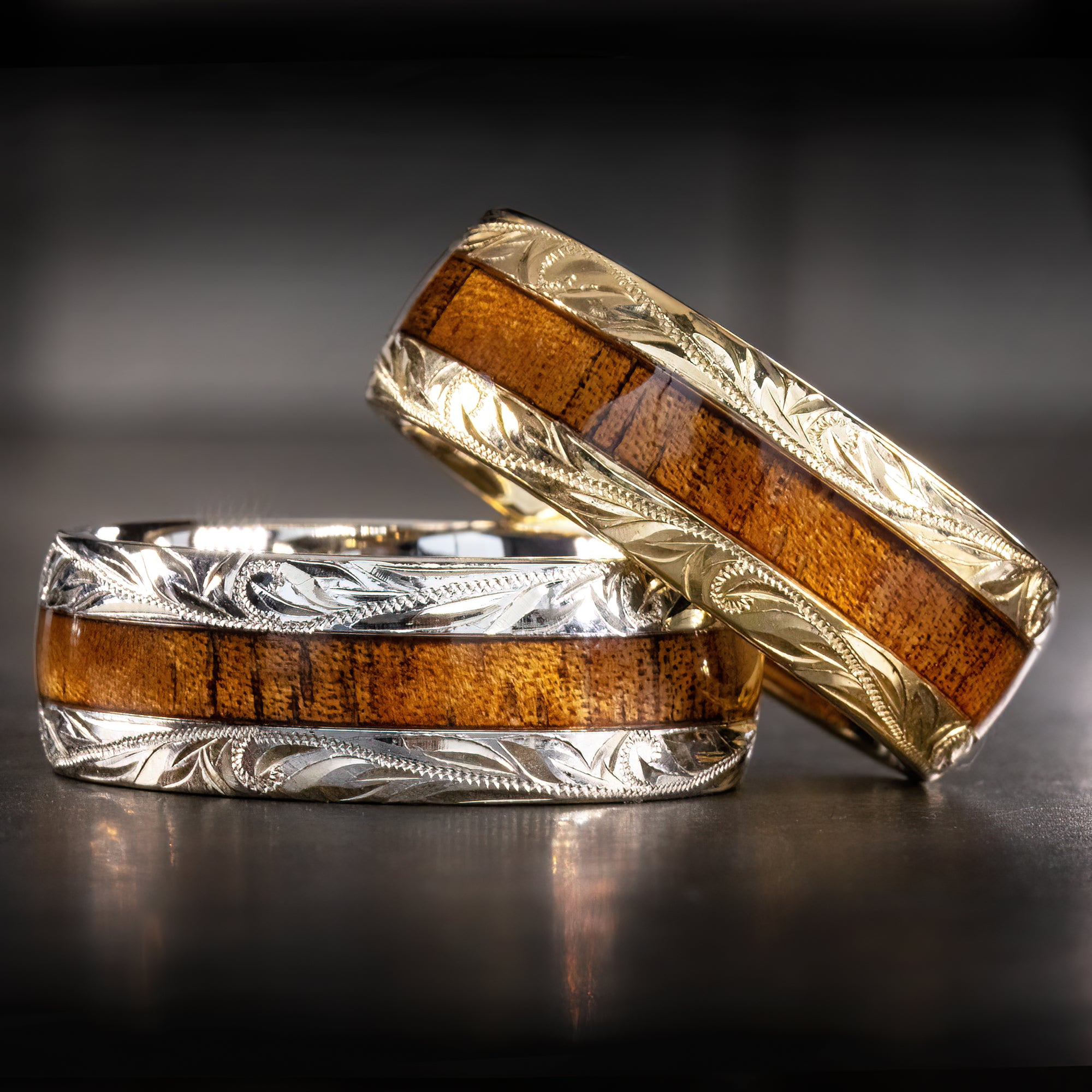


Koa Wood Rings and Ocean Exposure: The Complete Care Guide

You're heading to the beach with your koa wood ring on your finger, and a small but reasonable question is floating in the back of your mind: is this going to be okay? The short answer depends on your specific ring's finish and how much ocean time we're actually talking about. The longer answer, the one that protects your ring for years to come, is what this guide covers.
Quick answer: can you wear koa rings in the ocean?
A sealed koa wood ring can tolerate brief, accidental splash contact with the ocean as long as you rinse it with fresh water promptly afterward. An unsealed ring should stay dry whenever possible. Neither type is designed for swimming, surfing, or soaking.
Here's how common beach scenarios break down:
-
Beach stroll, hands dry: Fine for most sealed rings. No immediate concern.
-
Washing hands at a beach rinse station: Acceptable if brief. Pat dry right after.
-
Accidental wave splash or spray: Rinse with fresh water as soon as you can. You're likely okay.
-
Short accidental submersion: Rinse immediately, dry thoroughly, and inspect the finish carefully.
-
Swimming, surfing, or paddling: Remove the ring. Repeated wet/dry cycles and sustained salt exposure accelerate finish breakdown over time.
-
Chlorinated pool: Remove the ring whenever you can. Chlorine degrades protective coatings with regular exposure.
As Na Hoku's koa inlay care page (updated March 2026) puts it, koa wood is sensitive to moisture, and specifically warns against salt water, soaps, lotions, and chemicals. That's a good baseline to keep in mind.

Sealed vs unsealed rings, what you need to know
Not all koa rings behave the same way near water. The difference between a sealed and an unsealed finish is significant.
A sealed finish creates a barrier over the wood surface that slows moisture ingress. It won't make a ring waterproof, but it does give the koa wood a buffer against brief, incidental contact. An unsealed ring has no such protection, the wood is far more absorbent, and moisture can cause swelling, warping, grain lifting, or cracking even from modest exposure.
To find out which type you have, check the product page, the description that came with your ring, or reach out to the jeweler directly. If you're not sure, treat your ring as unsealed until you confirm otherwise. The more protective care plan costs nothing extra and can prevent real damage.
Happy Laulea's handcrafted koa wood inlay rings are made with genuine reclaimed and up-cycled Hawaiian koa, and the finish details vary by style. When in doubt about your specific ring's seal type, contact the studio directly.
Saltwater and chlorine: why they speed up damage
Salt is the bigger concern of the two, and here's why. When your ring dries after ocean contact, salt crystals are left behind in any micro-pores or finish imperfections. The next time it gets wet, those crystals draw moisture deeper. Over multiple wet/dry cycles, this process can break down a protective coating from the inside out.
The metal components are also at risk. Beverly's Jewelry noted in February 2025 that high salt content and mineral-rich ocean water "accelerate corrosion," dulling precious metals over time. FEMA's technical guidance on coastal corrosion (published July 2020) reinforces this, noting that salt spray from breaking waves "significantly accelerates the rate of corrosion of metal connectors and fasteners." That same chemistry applies to the metal band surrounding your koa inlay.
Chlorine is a separate issue. It doesn't leave behind salt crystals, but it's a powerful oxidizer that can degrade finish coatings and cause early seal wear, especially with regular pool exposure.
Beyond salt and chlorine, watch out for:
-
Sunscreen and lotion applied before putting the ring on
-
Sand and grit that work into seams under friction
-
Soap or cleanser residue left on the wood surface after washing hands
These compounds compound the problem rather than acting alone. Rinsing and drying after any combination of these is good habit, not overcaution.

Practical exposure limits by activity
No test standard exists for koa ring ocean exposure, so this guidance is intentionally conservative. The goal is protecting a piece you'll want to wear for decades.
|
Activity |
Recommendation |
|---|---|
|
Beach walk, dry hands |
Wear it. Minimal risk. |
|
Beachside photos, minimal splash |
Fine. Rinse and dry after. |
|
Accidentally caught a wave |
Rinse with fresh water immediately. Dry and inspect. |
|
Snorkeling or swimming |
Remove the ring before entering the water. |
|
Regular ocean swimming or surfing |
Remove every time, store safely. |
|
Chlorinated pool |
Remove whenever possible. |
The general rule: remove your ring before putting your hands in water for extended periods. If you're a regular ocean swimmer or spend hours a day in water, a koa ring probably isn't the best ring for those specific activities. Wear it for everything else, and take it off when the water comes out.
If you're shopping for a ring that's part of an active beach lifestyle, the metal band material matters too. See our comparison of titanium vs tungsten rings for more on how each metal performs in daily wear conditions.
Aftercare after ocean exposure
You got caught in a wave, or forgot to take it off before a quick swim. Here's exactly what to do:
-
Rinse with fresh water as soon as possible. Run the ring under cool, clean tap water to flush away salt crystals and mineral residue. Don't scrub the wood surface aggressively.
-
Pat dry with a soft, lint-free cloth. Blot rather than rub. Pay attention to the seams between the koa inlay and the metal band, where moisture collects.
-
Air-dry fully before storing. Set it on a clean dry surface for at least 30 minutes before putting it in a ring box or bag. Trapping moisture accelerates the damage you're trying to prevent.
-
Skip the chemical cleaners. No alcohol wipes, no bleach, no ammonia-based solutions, no ultrasonic cleaners. These can strip the protective finish faster than salt water alone.
-
Inspect the finish once fully dry. Look for any cloudiness, dullness, or raised grain that wasn't there before.
For routine maintenance, cleaning your ring at home doesn't require special products. Our step-by-step guide to cleaning a tungsten ring at home covers safe household methods that also apply to koa inlay care.

How to tell when the seal is failing
Periodic inspection is your best defense. After a few beach days or a season of active wear, give your ring a close look. Signs the protective finish may need professional attention:
-
The koa surface looks dull or flat where it used to have a clear luster
-
Hairline cracking visible under good lighting
-
Grain in the wood feels raised or rough to the touch
-
A cloudy or milky appearance on the coating, particularly near the edges
-
Lifting or separation at the seam between the wood inlay and the metal
-
A white film that keeps returning even after you rinse the ring
-
Any visible gap or lifting at the junction between wood and metal band
If you notice any of these signs, stop wearing the ring in or around water until you've had it evaluated. A compromised seal won't protect anything, and continuing to expose the wood to moisture makes the repair more involved.
Don't try to fix it yourself with a random sealant or wood oil from a hardware store. Unknown products can trap existing moisture, react with the original finish, or affect the adhesion holding the inlay in place. Reach out to the jeweler for approved reseal guidance or a professional service evaluation.
Inlay vs full-wood rings and multi-material notes
Koa wood inlay rings (where a strip or panel of koa sits within a metal band) and full-wood rings behave a little differently near water.
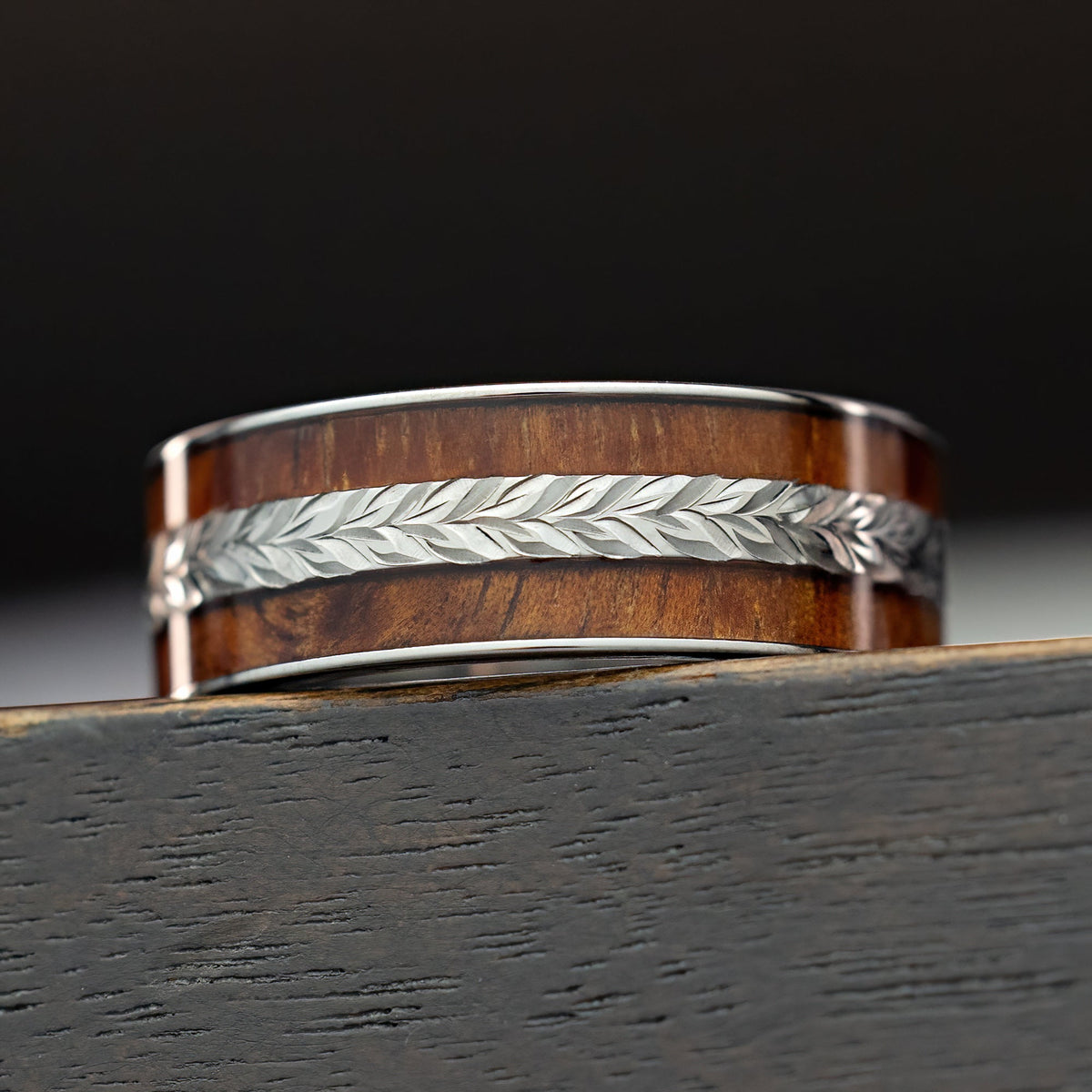
With an inlay ring, the protective coating covers the exposed wood face, but the seams and edges where wood meets metal are often the most vulnerable points. Moisture entering those seams can undermine the adhesive holding the inlay and cause the wood panel to lift over time. The metal band itself may also show early corrosion signs at those junction points.
Full-wood construction gives moisture more surface area to work with if the seal degrades. Any exposed grain, nick, or scratch becomes an entry point.
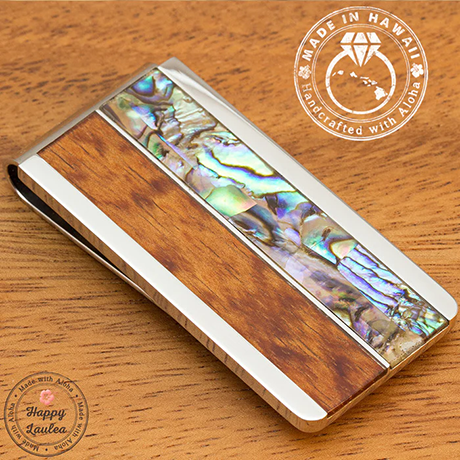
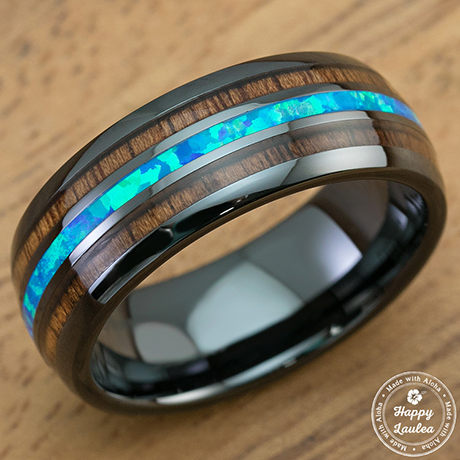
If your ring includes additional materials like opal, abalone shell, meteorite, or black jade, add those to your list of concerns. Settings and adhesives for these materials are often the first point of failure in water, before the wood itself shows any visible damage. A titanium ring with koa wood and opal inlay, for example, introduces multiple material interfaces that benefit from careful aftercare.
If damage does occur, contact Happy Laulea's team directly. Bring photos of the affected area and a description of the exposure, and the studio will walk you through evaluation and repair options from there.
Troubleshooting quick reference
Ring got splashed or briefly submerged: Rinse right away with fresh water, pat dry, air-dry completely, then inspect. In most cases you'll be fine.
White film or residue that won't rinse away: Rinse thoroughly again. If the film persists or the coating looks cloudy/lifting at the edges, stop exposing the ring to water and contact the jeweler for a seal inspection.
Surface feels dry or rough: This is typically a sign of finish wear, not just grime. Avoid applying random oils or polishes. Request reseal guidance from the original maker.
Metal band has tarnished or developed spotting: Clean the metal gently using a jewelry-safe method (avoid anything abrasive near the wood). Then inspect the seal at the junction between the metal and the wood, since tarnish near an inlay seam can indicate moisture penetration.
Koa is a beautiful and genuinely durable wood, but it's still wood. Paired with the right protective finish and a simple care routine, a koa ring can hold up beautifully through years of daily wear, including the occasional beach day. The habits that protect it most are also the easiest ones: rinse, dry, inspect, and remove before a swim.