
Top Brands for Solid Gold Hawaiian Heirloom Pendants: Buyer's Guide
If you're searching for a solid gold Hawaiian heirloom pendant, you already know this isn't a quick impulse buy. These pieces carry cultural weight, they're built to be passed down, and the difference between a quality maker and a low-effort knockoff shows clearly once the piece is in your hands. This guide is for couples, gift buyers, and anyone wanting a pendant they can wear for decades, covering the brands worth considering, how to compare them, what real prices look like, and what to check before clicking "buy."
How to evaluate a Hawaiian heirloom pendant brand
Not all brands that use the word "heirloom" actually deserve it. Here's what separates genuine makers from the rest:
-
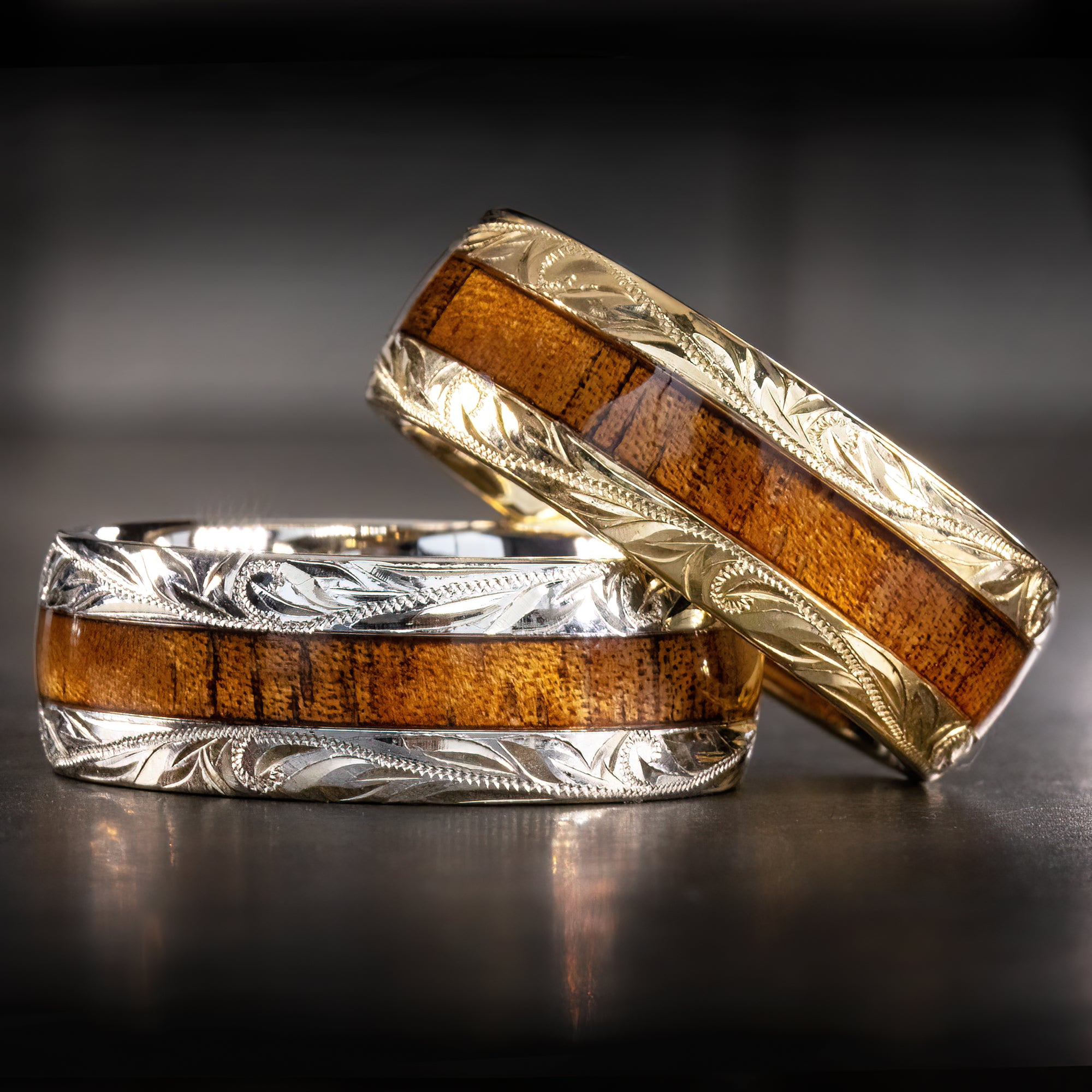
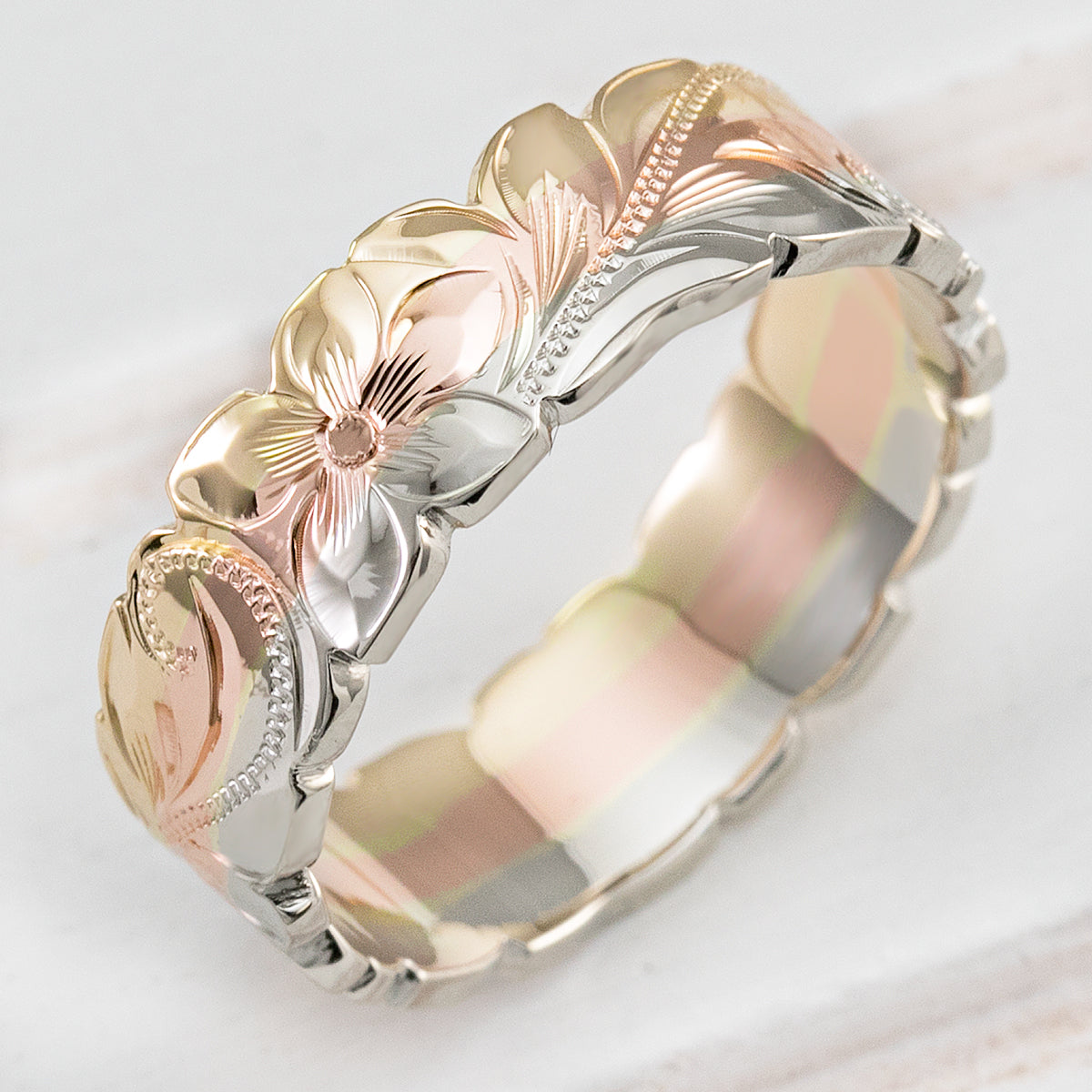
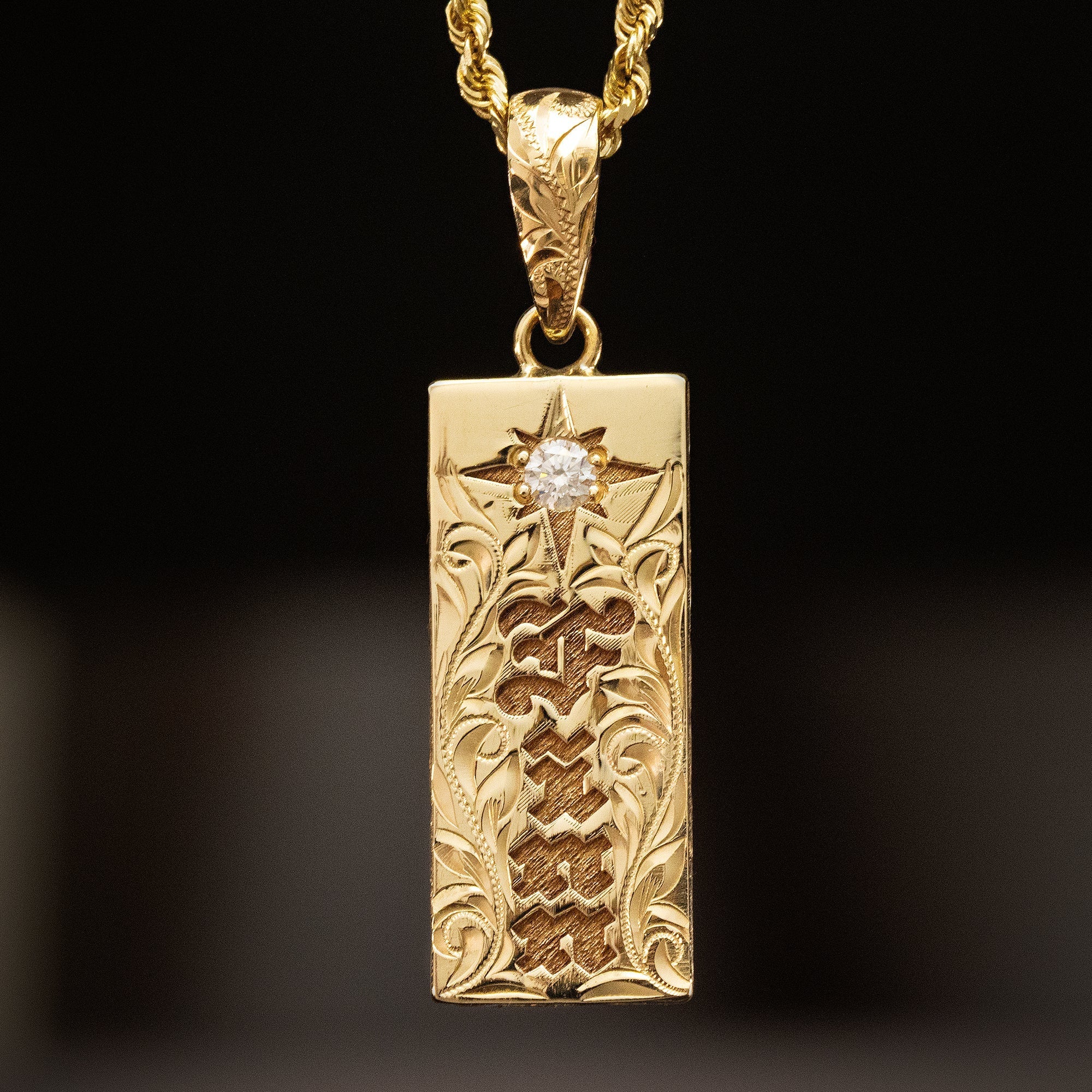
Hand engraving vs. machine etching. Traditional Hawaiian heirloom jewelry is hand-engraved by artisans. Machine-etched lines look uniform and shallow. On a product page, look for language like "hand-engraved by our artisans" paired with photos that show depth and variation in the design.
-
Karat options. Serious brands offer 10K, 14K, and sometimes 18K gold. Most solid Hawaiian heirloom pendants are made in 14K, which balances durability with gold purity (58.5% pure gold, stamped "585" or "14K"). Some premium makers offer 18K (75% pure gold, stamped "750" or "18K") at roughly 15-25% higher cost.
-
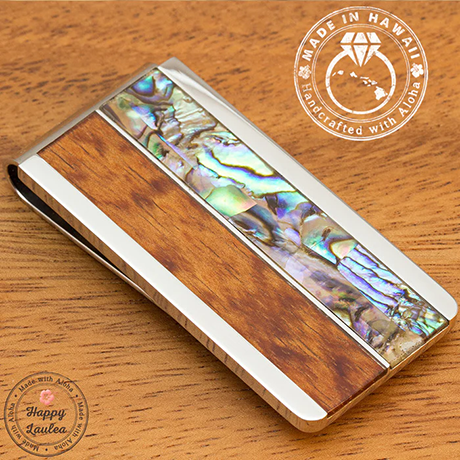
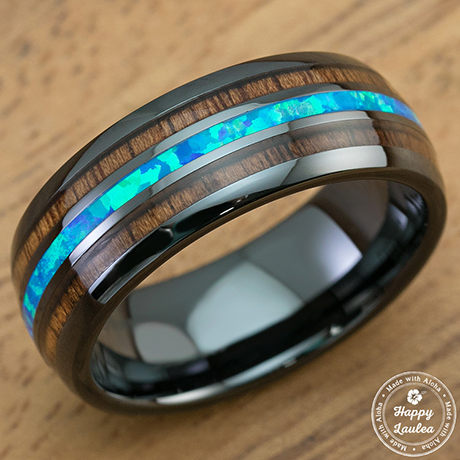
Materials and inlay. The best Hawaiian jewelry brands go beyond plain gold, incorporating opal, abalone shell, Koa wood, black jade, and diamonds into pendants adds both beauty and cultural meaning. Ask whether inlay materials are genuine or synthetic.
-
Hallmarking. Every solid gold pendant should carry a karat stamp. Reputable makers also include a maker's mark or brand identifier on the back of the piece.
-
Customization and engraving options. Classic heirloom pendants feature personalized names, Hawaiian words, or initials rendered in Old English or Hawaiian script. A brand worth buying from will offer clear custom options with realistic turnaround timelines.
-
Warranty and repairs. Look for brands that stand behind their work with a repair policy. Even the best jewelry can need resizing or refinishing over time.
Top brands for solid gold Hawaiian heirloom pendants
Happy Laulea

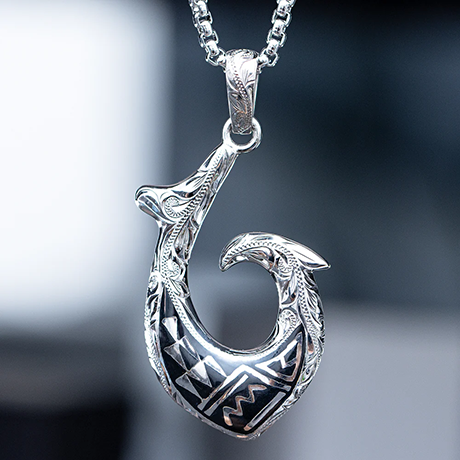
Happy Laulea is a Hawaii-based jewelry designer making handcrafted Hawaiian heirloom jewelry shipped worldwide. Their pendant catalog includes 14K gold plumeria pendants, Makau (fish hook) pendants in gold and sterling silver, and heirloom scroll-engraved pieces featuring Hawaiian Old English and Maile motifs.
What sets them apart for online buyers is the combination of genuine Hawaiian craftsmanship with transparent product details, multiple inlay options (opal, abalone shell, Koa wood, meteorite), and a large base of verified customer reviews.
Their 14K Gold Floating Plumeria Pendant starts from $295, with diamond-set versions like the 14K Gold Floating Plumeria Scattered Diamond Pendant from $515. The Makau fish hook collection spans sterling silver and 14K gold, with Koa wood inlay options that are genuinely distinctive. For anyone browsing from outside Hawaii, Happy Laulea is one of the most accessible ways to get a made-in-Hawaii piece with real personalization.
Na Hoku
Founded in 1924, Na Hoku is Hawaii's longest-running jewelry retailer and carries one of the largest selections of traditional heirloom pendants. Their pieces are available in 14K yellow, white, and rose gold, with vertical name pendants, plumeria barrel designs, and scalloped-edge styles. Na Hoku's "Kuuipo" (sweetheart) pendant in 8mm 14K yellow gold with hand-engraved Old English lettering retails around $1,199. They have retail locations across Hawaii and an online store, making them a solid choice for buyers who want an established brand with decades of track record.
Honolulu Jewelry Company
In business since 1981, Honolulu Jewelry Company specializes in custom 14K and 18K heirloom pendants with a focus on personalization. Their premium Hawaiian heirloom line includes scroll and plumeria motifs, name pendants, and Honu (sea turtle) designs with traditional enamel work. They're known for strong customer service and pieces made to order. Premium vertical pendants in their lineup run around $900 and up.
Royal Hawaiian Heritage Jewelry (RHHJ)
RHHJ is a specialist brand focused entirely on heirloom jewelry. Their pendant range is particularly wide, from 14K initials and Hawaiian word pendants (starting around $279) up to custom horizontal name pendants over $1,600. Named designs like the "Queen Emma" pendant (hand-engraved, smooth edge, with optional pave diamonds) reflect the brand's depth of cultural knowledge. They also offer sterling silver options for buyers who want the traditional look at a lower entry price.
Philip Rickard Honolulu
Philip Rickard manufactured heirloom jewelry on Oahu for nearly 40 years and built a reputation for detailed customization, including color-enameled lettering and diamond integrations. Their Makau fish hook charm in 14K or 18K gold is a popular pendant choice, and their Iolani Palace collection features historically inspired designs. Their pendants generally start around $840 and up for 14K pieces.
Maui Divers Jewelry
Maui Divers is well-known for its plumeria and honu motif pendants, particularly barrel-style designs in 14K gold with diamond accents. They have physical stores across Hawaii and an e-commerce site, and their heirloom initial pendants are available as special orders. Their Honu sea turtle pendant in 14K solid yellow gold with Koa wood inlay is a distinctive piece that combines traditional motif with natural Hawaiian materials.
Typical price ranges for solid gold Hawaiian heirloom pendants
Prices vary considerably based on the design, karat, size, and whether gemstones are included:
-
Small charms and initial pendants (14K): $250-$600
-
Standard 6-8mm name bars or plumeria pendants (14K): $600-$1,500
-
Large or diamond-accented heirloom pendants (14K/18K): $1,500-$5,000+
18K gold typically adds 15-25% to the cost of an equivalent 14K piece. Custom sizing, heavier thickness, or personalized engraving can also push prices higher. Happy Laulea's plumeria pendants start at $295, making them one of the more accessible entry points for genuine 14K gold Hawaiian heirloom pieces.
How to verify authenticity and quality
Once a piece arrives, or before you buy from a secondary market, here's how to confirm you're getting what you paid for:
Check the hallmark stamp. Every solid gold piece should have a karat stamp: "10K", "14K", "14KT", "18K", or their millesimal equivalents (417, 585, 750). This mark is typically on the bail or the back of the pendant. Use a jeweler's loupe if it's hard to read.
Look for the maker's mark. Established brands stamp their pieces with an identifier. If you're buying secondhand, search the mark against known Hawaiian jewelry makers.
Request a certificate of authenticity. Higher-end brands often issue certificates with a unique identification number. Ask about this before purchasing.
The magnet test. Real gold isn't magnetic. If a pendant sticks firmly to a magnet, it's not solid gold.
Density test. Genuine gold is dense and sinks immediately in water. Gold-plated or hollow pieces behave differently.
For definitive verification: A local jeweler with an X-Ray Fluorescence (XRF) machine can give a non-destructive, accurate reading of metal purity without any risk to the piece.
For hand-engraving specifically, look at the design lines under magnification, hand-engraved work shows slight variation and texture depth that machine-etched pieces lack.
Buying checklist: what to confirm on any product page
Before completing your order, run through these points:
-
Is the gold described as "solid" (not plated, filled, or vermeil)?
-
What karat is it, and is the hallmark explicitly mentioned?
-
Is engraving hand-done or machine-done?
-
What are the gemstone details, natural or synthetic? What quality grade?
-
Are there customer photos showing the actual piece?
-
What is the production turnaround for custom orders? (Typically 1-4 weeks)
-
What is the return and exchange policy? Custom pieces are generally non-refundable.
-
Does the brand list a repair or warranty policy?
For heirloom bracelets and matching sets, Happy Laulea's Hawaiian heirloom jewelry collection gives a useful reference for what hand-engraved Hawaiian Old English and scroll-wave designs look like in practice.
Frequently asked questions
How do I verify the karat of a Hawaiian heirloom pendant? Look for the hallmark stamp on the bail or back of the piece. "14K" or "585" confirms 14-karat gold. For certainty, take it to a jeweler for XRF testing, it's fast, non-destructive, and inexpensive.
How long does custom engraving take? Most brands quote 1-4 weeks for made-to-order and custom-engraved pieces. Rush fees often apply for faster turnaround. Check the brand's current production timeline at checkout, since holiday periods can extend this.
Can I return a custom-engraved pendant? Generally, no. Custom and personalized items are non-refundable at most Hawaiian jewelry brands because they're made specifically to your specifications. Confirm the return policy before ordering, and double-check all name spellings and sizing.
What's the difference between 14K and 18K for heirloom pendants? 14K (58.5% gold) is more durable and the standard for most Hawaiian heirloom pieces, it holds engraving well and resists everyday wear. 18K (75% gold) has a richer color and is softer, making it better suited to pendants you'll wear occasionally rather than daily. The price premium for 18K is roughly 15-25%.
Is "Hawaiian heirloom jewelry" only made in Hawaii? Traditionally yes, but the term isn't legally protected in the same way origin labels like "Kona coffee" are. The safest approach is to buy from brands that explicitly state their pieces are made in Hawaii and can describe their craftspeople. Happy Laulea, Na Hoku, Maui Divers, and the other brands listed here all manufacture in Hawaii.
For more context on how these traditions developed, from Queen Lili'uokalani's famous gold bracelet gift through to modern personalization, here's helpful historical overview that explains why these pieces carry the cultural significance they do.